
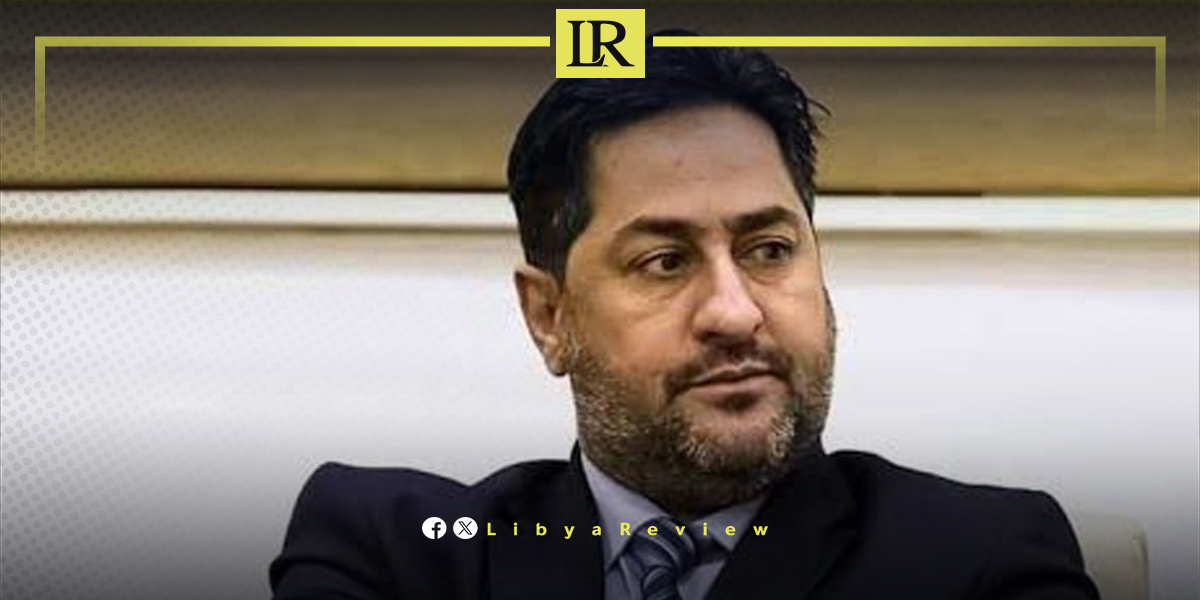
A member of Libya’s House of Representatives has criticized the latest cabinet changes announced by Head of Libyan outgoing Government of National Unity (GNU) Abdel-Hamid Dbaiba, describing the move as unlawful and politically motivated.
Saeed Amgheib, a member of the Libyan House of Representatives, said the newly announced government formation by Dbaiba under the pretext of filling vacant positions lacks legal legitimacy and violates the country’s political framework.
Speaking to media outlets, Amgheib argued that the step represents another attempt by the outgoing Government of National Unity to prolong its tenure despite what he described as the loss of public legitimacy.
“The new government formation announced by Dbaiba under the claim of filling vacancies is illegal,” Amgheib stated. He added that the move appears to be an effort to extend the life of a government that, in his view, no longer enjoys the confidence of the Libyan people.
Political tensions surrounding the status of Libya’s executive authority have continued for years, as rival administrations and institutions compete for legitimacy and control over state resources. The Government of National Unity, headed by Abdel-Hamid Dbaiba, was originally formed through a UN-backed political process intended to unify state institutions and lead the country to national elections.
However, the failure to hold the planned elections has deepened political divisions, with the Libyan House of Representatives and several political figures arguing that the GNU’s mandate has expired. This dispute has contributed to the existence of competing authorities and ongoing debates about the legality of government decisions.
Amgheib warned that accepting positions within the newly announced government lineup carries serious responsibility. He said individuals who agree to take these roles will be held accountable for their decisions before the Libyan nation and future generations.
“We hold everyone who accepted these positions fully responsible before the nation and history,” he said. “Accepting these posts does not serve the country but instead supports the continuation of corruption.”
The lawmaker also accused the current administration of mismanaging Libya’s national wealth, claiming that the continuation of Dbaiba’s government would lead to further misuse of the country’s resources.
Libya has struggled with political fragmentation since 2014, with competing governments and institutions vying for authority. Efforts led by the United Nations and international partners have sought to facilitate a unified political framework and pave the way for elections, but progress has remained slow amid ongoing disputes between rival factions.
The latest controversy surrounding the cabinet reshuffle reflects the broader political deadlock in Libya, where questions over legitimacy, governance, and control of state institutions remain central to the country’s political crisis.

