
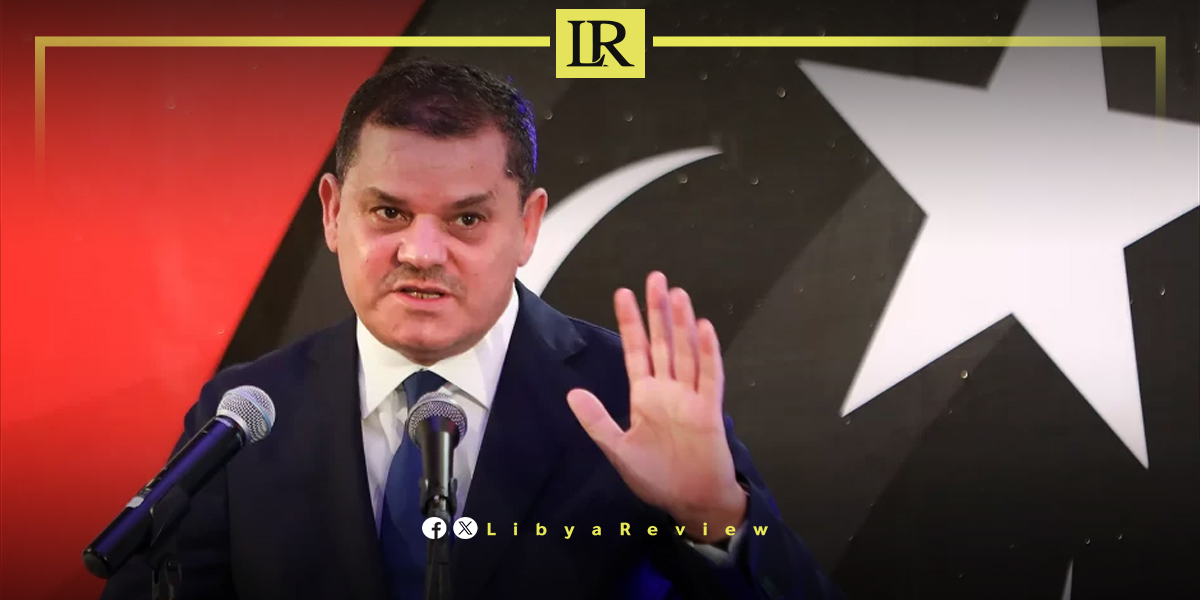
Four years have passed since Abdel-Hamid Dbaiba announced a political initiative promising to return authority to the Libyan people through national elections, yet none of the key commitments outlined in the plan have been implemented, raising renewed criticism from political observers and public figures.
On February 22, 2022, Dbaiba introduced what he described as the “Return of the Trust to the People” initiative, a political roadmap aimed at ending Libya’s prolonged transitional phase and organizing general elections. The plan set June 24, 2022, as the proposed date for holding nationwide parliamentary and presidential elections.
The initiative included several steps intended to prepare the legal framework for the vote. It proposed forming a committee tasked with drafting a parliamentary election law within two weeks. The draft law was to be presented to the Libyan House of Representatives after consultation with the High Council of State. If agreement between the two institutions proved impossible, the plan suggested transferring the proposal to the Libyan Political Dialogue Forum, where it could be issued through a decree by the Presidential Council.
The roadmap also outlined alternative legal paths in case the drafting process stalled. These included relying on existing electoral legislation such as Law No. 2 of 2021 or Law No. 4 of 2012. In parallel, the initiative proposed launching the electoral process according to a timetable prepared by the High National Elections Commission. The plan also called for holding a public referendum on the draft constitution in accordance with the tenth amendment to the Constitutional Declaration and the referendum law.
Despite these proposals, Libya has yet to hold the elections that were promised, and the constitutional referendum has not taken place. The continued delay has fueled criticism from political actors who argue that the lack of progress has prolonged the country’s transitional period.
Some analysts say the failure to implement the plan reflects ongoing divisions between Libya’s political institutions and a lack of coordination between legislative and executive authorities. Others argue that unresolved disputes over electoral laws and constitutional arrangements continue to block progress toward a national vote.

