
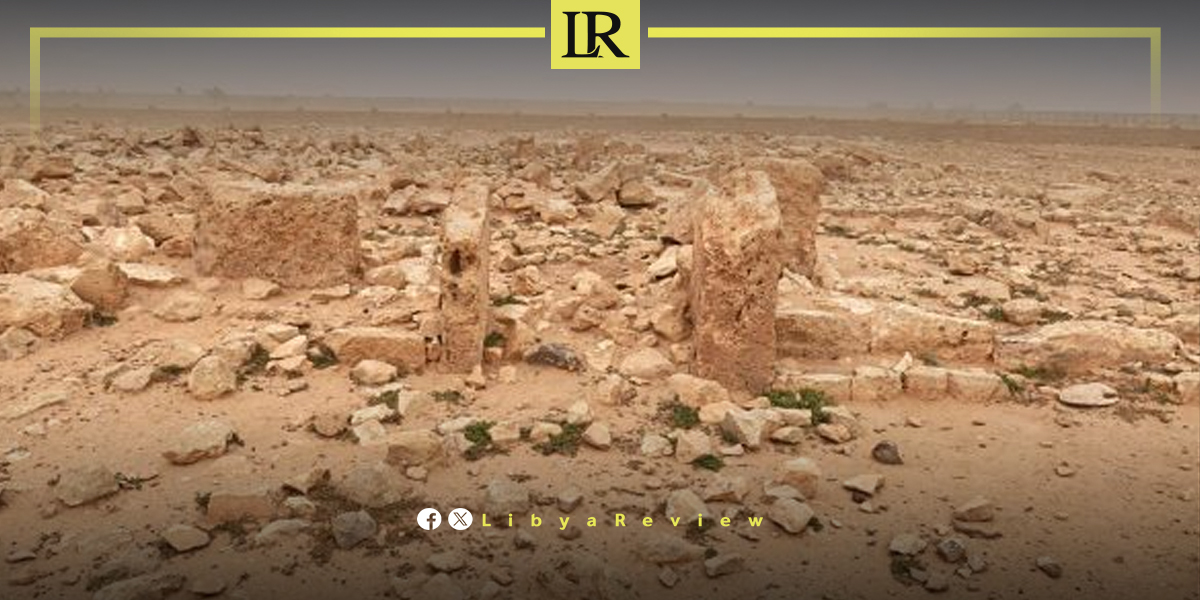
Authorities in eastern Libya have announced the discovery of a remarkably preserved Roman-era palace west of Benghazi, marking a significant addition to the country’s growing list of archaeological finds.
The Benghazi Antiquities Authority confirmed on Tuesday that the site, located in the Grotha area, has been identified as a complete Roman palace complex with its original annexes. Historically known as “Qasr Al-Jadi,” the structure had long been referenced in historical manuscripts but was absent from official archaeological records for years.
Accidental Discovery During Field Visit
According to officials, the discovery was made by chance during a routine field visit conducted by department head Moneim Al-Fitouri, accompanied by researcher Fouad Al-Qamati. The visit was part of ongoing inspections related to site assessments and administrative reviews of land classifications.
During the inspection, the team identified distinctive architectural remains that prompted further investigation. These findings were cross-referenced with archival materials and historical maps, ultimately confirming the site’s identity as the long-lost Roman palace documented in earlier texts.
Plans to Secure and Preserve the Site
Following the confirmation, authorities pledged to take immediate steps to protect the site. Plans include enclosing the area with a protective fence and implementing security measures to prevent encroachment or damage.
Officials stressed that the discovery represents a major step forward in safeguarding Libya’s cultural heritage, particularly in Benghazi and its surrounding regions, which are rich in ancient Greek and Roman history.
Renewed Focus on Cultural Heritage
The discovery highlights ongoing efforts by Libyan authorities to document and preserve archaeological sites that have remained overlooked due to years of instability and limited field research.
Experts believe that further excavation and study of the newly identified palace could provide valuable insights into Roman-era life in eastern Libya, as well as the architectural and administrative significance of the region during antiquity.

