
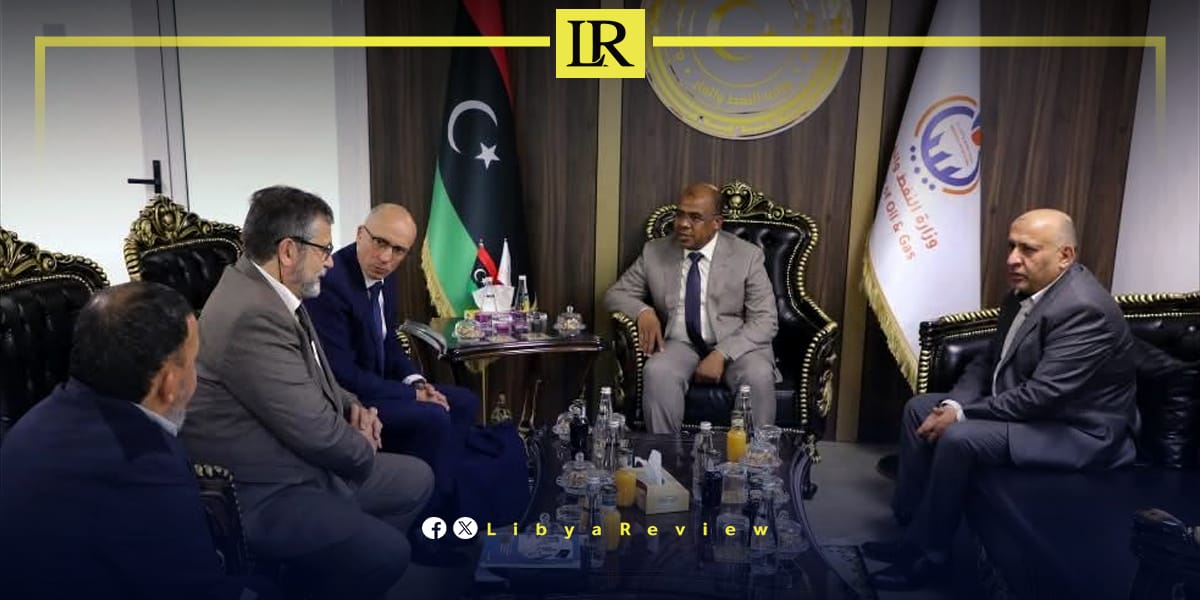
Libya’s Minister of Oil and Gas has held talks with French consultancy Beicip-Franlab to explore technical cooperation aimed at boosting efficiency and development in the country’s energy sector.
The meeting brought together Oil and Gas Minister Khalifa Rajab Abdulsadek and a senior delegation from Beicip-Franlab, including chairman Thierry Le Moigne and business development director Serge Soufanian. Discussions focused on strengthening collaboration in reservoir studies, exploration strategies, and the use of advanced technologies.
Officials said the talks aimed to improve production efficiency and support Libya’s long-term plans to expand its oil and gas capacity. The ministry highlighted the importance of international expertise in modernising operations and enhancing technical performance across key projects.
A ministry official said, “Cooperation with specialised international firms will help develop more accurate reservoir models and improve exploration outcomes.” The statement underlined Libya’s intention to adopt advanced solutions to maximise output and reduce operational challenges.
Libya holds Africa’s largest proven oil reserves but continues to face infrastructure gaps and technical constraints after years of conflict. Authorities have increasingly turned to foreign partners to support recovery efforts and rebuild the energy sector.
For the Libyan economy, improved oil and gas production remains critical. The sector accounts for the majority of state revenues and plays a central role in funding public spending and development programmes.
The meeting also reflects broader efforts to attract international investment and rebuild confidence among global energy companies. French firms have long shown interest in Libya’s hydrocarbon potential, particularly in exploration and technical services.
However, challenges persist. Political divisions, regulatory uncertainty, and security risks continue to affect project implementation and investor confidence.
Analysts say sustained cooperation with experienced international firms could help Libya overcome technical barriers and improve output, but long-term success will depend on stability and consistent policy direction.

