
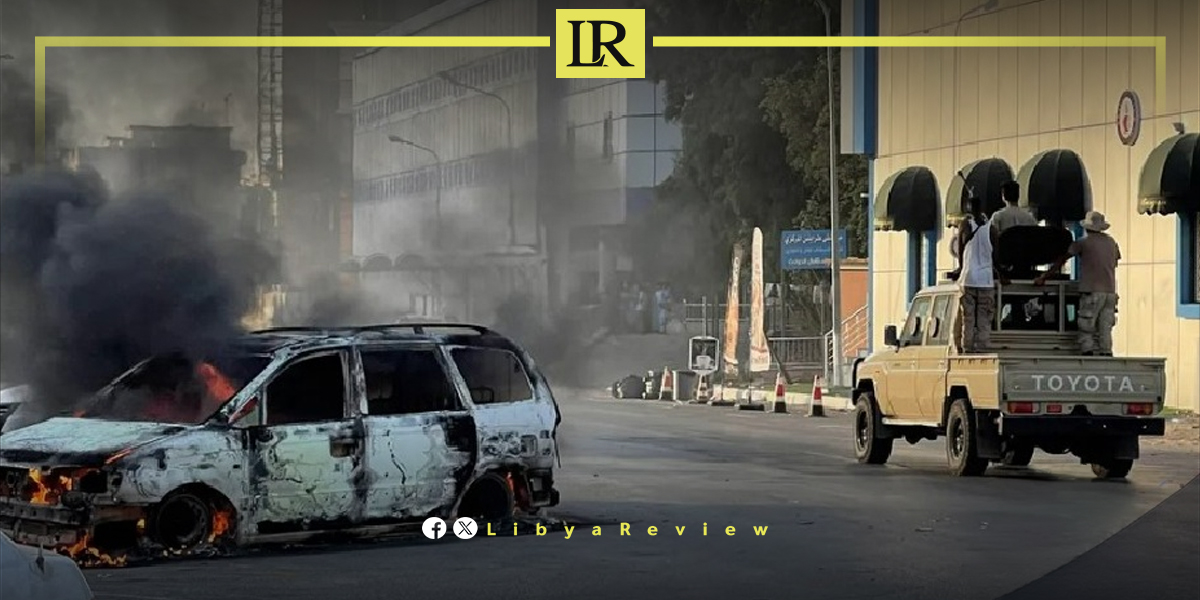
Armed clashes erupted on Saturday in the western Libyan cities of Sorman and Al Zawiya, marking a new escalation in an already fragile security environment and raising serious concerns for civilian safety.
The fighting broke out in several areas and quickly spread into residential neighborhoods, particularly in the Harsha district of Al Zawiya. The intensity of the clashes created panic among residents, as gunfire and explosions were reported across multiple locations. At least one fatality has been confirmed, with a young man identified as Moatasem Al-Kout Al-Maqouri killed during the violence.
Local authorities responded by urging citizens to remain cautious and follow safety guidelines. Officials in Sorman called on residents to stay indoors, avoid movement in affected areas, and comply with instructions issued by security agencies.
They also appealed to the armed groups involved to de-escalate tensions and prioritize public safety, warning that continued fighting could further destabilize the region.
The violence disrupted daily life across both cities. Educational institutions were among the first to react, with the Higher Institute of Medical Technology in Sorman suspending classes and postponing examinations indefinitely. Similar measures were reported across other colleges and schools as the situation deteriorated.
Clashes were reported in multiple locations, including Ingar near the coastal road, Al-Qasr, Market Road, and Railway Road, as well as Bin Youssef Road and Sabriya. The spread of fighting across key urban areas complicated movement and heightened risks for civilians attempting to navigate the city.
The escalation also led to the full closure of the refinery bridge along the coastal highway, a critical route linking several areas in western Libya. The closure significantly disrupted transportation and limited access for emergency services.
Amid the worsening situation, the Libyan Red Crescent issued an urgent appeal to families trapped in conflict zones. The organization advised residents to remain inside their homes, stay away from windows and exposed areas, and only leave when absolutely necessary. It also called for the establishment of safe corridors to evacuate civilians and deliver humanitarian aid.

