
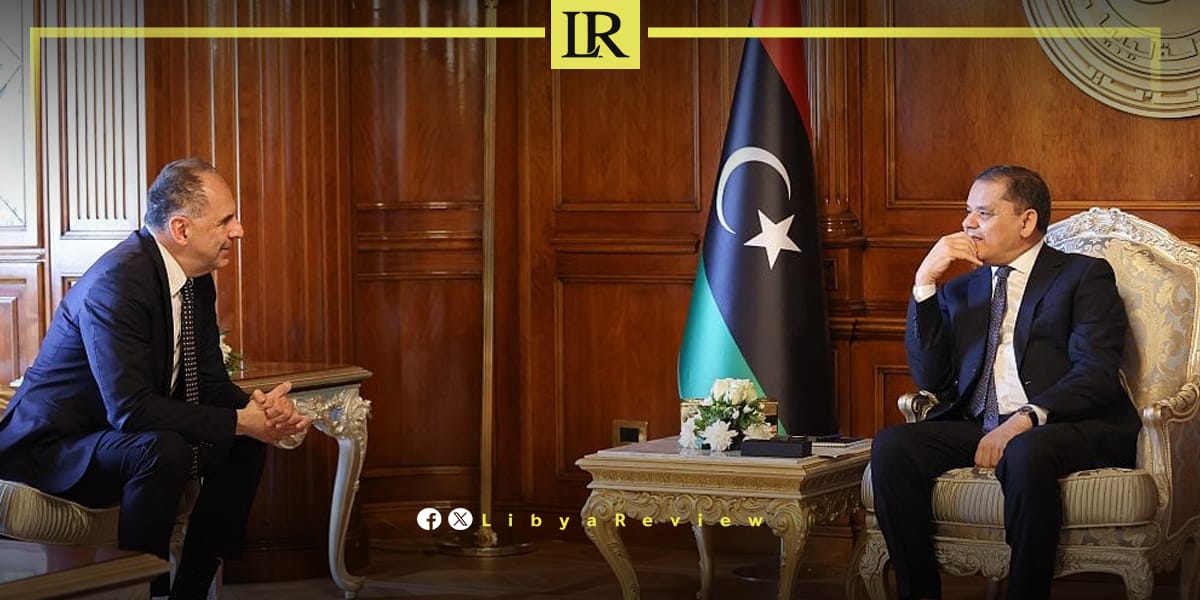
Greece has intensified talks with Libya over maritime boundary delimitation, as both sides seek to revive negotiations on exclusive economic zones in the eastern Mediterranean, a move seen as countering a disputed 2019 agreement between Libya and Turkey.
According to EurActiv newspaper, Greek Prime Minister Kyriakos Mitsotakis said discussions would advance through technical committees focusing on the continental shelf and exclusive economic zone boundaries. He stressed that any agreement would align with international law and follow similar accords Greece has reached with other countries in the region.
The renewed engagement comes as tensions persist in the southeastern Mediterranean, where competing claims over maritime zones have been fuelled by the discovery of offshore gas reserves. The issue has drawn regional and international attention due to its economic and geopolitical implications.
In 2019, Turkey signed a maritime deal with Libya’s Tripoli-based administration, drawing a boundary that Greece argues ignores the rights of its islands, including Crete. The agreement has been widely criticised by Greece, the European Union and Egypt, which view it as inconsistent with established maritime law.
Although Libya’s parliament has not formally ratified the 2019 deal, Turkey continues to defend its validity. Ankara maintains that maritime boundaries should be based on mainland coastlines rather than island territories, a position rejected by Athens.
For Libya, the talks represent a potential step towards clarifying maritime claims and attracting investment in offshore energy exploration. Clear legal frameworks could encourage international companies to expand operations in Libya’s waters.
The issue also affects broader regional dynamics, as maritime disputes intersect with energy security, migration routes, and geopolitical rivalries across the Mediterranean.
However, significant challenges remain. Political divisions within Libya complicate decision-making on international agreements, while competing claims from regional powers continue to hinder consensus.

