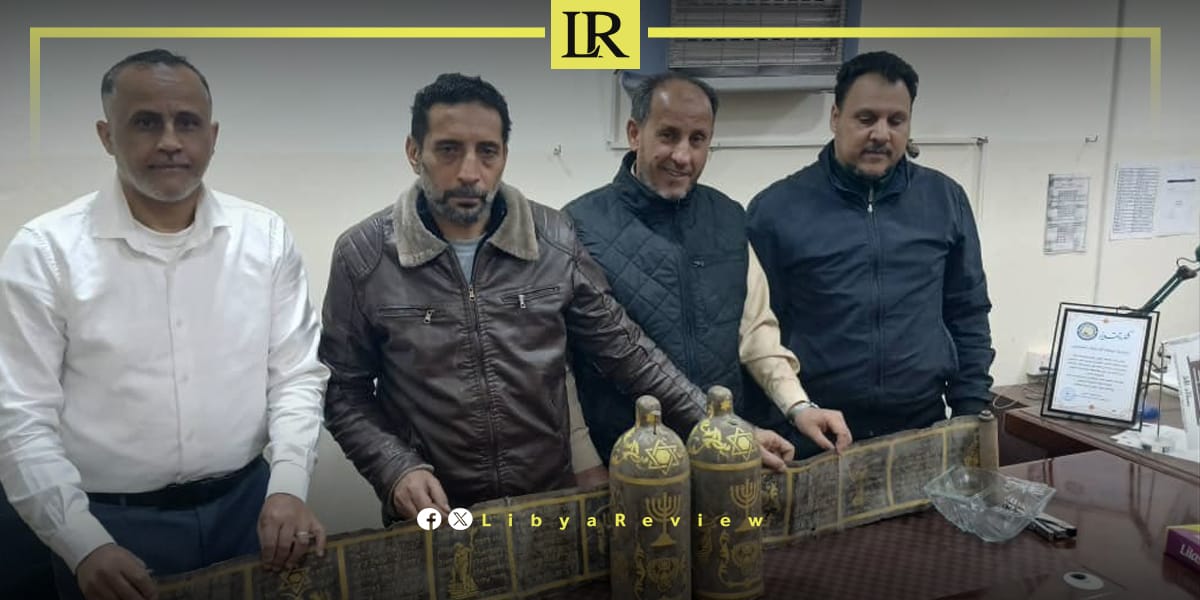
Authorities in eastern Libya have seized a rare Hebrew leather manuscript in the historic city of Shahat, sparking interest among archaeologists and cultural heritage experts.
The manuscript was officially handed over to the Shahat Antiquities Authority after being confiscated by the Internal Security Agency branch in the city. Officials confirmed that the transfer followed legal procedures, ensuring the artifact is now under state protection.
According to preliminary information, the manuscript is a long leather document adorned with gilded text, decorative illustrations, and intricate ornaments. Among the imagery are drawings believed to depict the Prophet Moses, adding to its potential religious and historical significance.
Specialist Mohamed Muftah Fadil assisted in documenting the artifact and providing an initial technical assessment in coordination with the antiquities authority. His early observations suggest the manuscript could hold considerable value, though its authenticity has yet to be confirmed.
Officials stated that the manuscript will undergo a comprehensive scientific examination. Experts will conduct detailed analysis and documentation to determine whether it is an original archaeological piece or a later reproduction. This process is expected to include material testing and stylistic comparisons with known historical manuscripts.
The discovery has drawn attention due to the rarity of Hebrew manuscripts found within Libya, particularly those featuring elaborate artistic elements and religious depictions. Such findings are uncommon in the region and may offer insights into historical cultural exchanges.
Shahat, historically known as Cyrene, is one of Libya’s most significant archaeological sites. It contains extensive ruins dating back to the Greek and Roman eras. Authorities continue to strengthen efforts to protect antiquities in the area, amid ongoing concerns over illegal trafficking and smuggling of cultural artifacts.

Ancient Hebrew Manuscript Discovered And Seized In Eastern Libya