
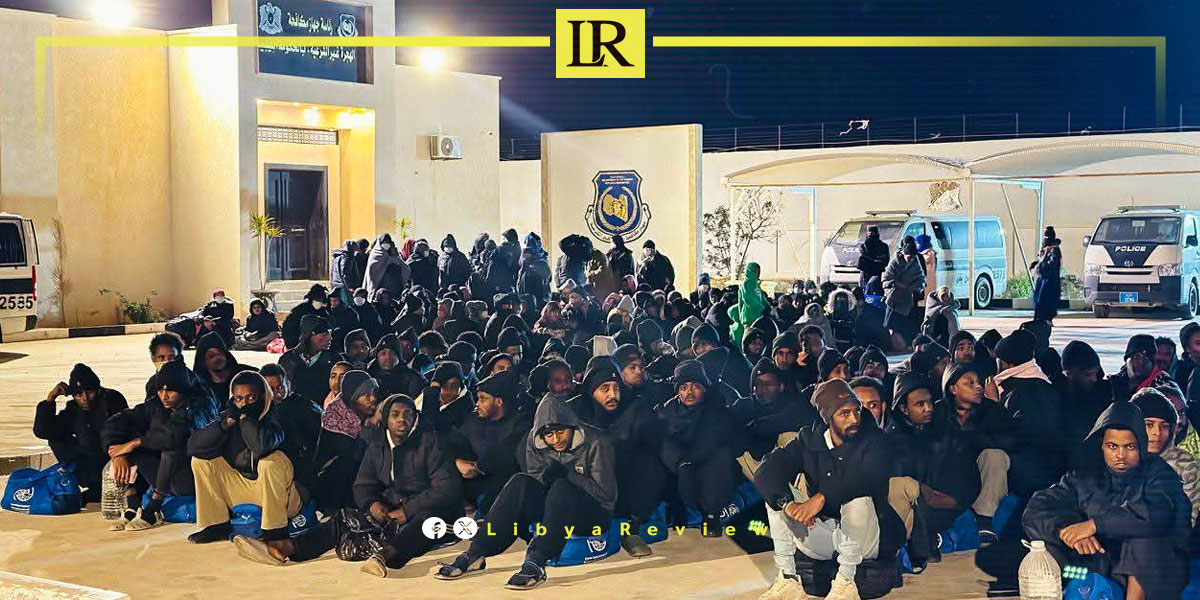
Libyan authorities are preparing to deport 466 Nigerian migrants from the Brak Al-Shati detention centre in southern Libya as part of ongoing efforts to manage irregular migration and organise repatriation procedures.
The arrangements were reviewed by Libya’s Minister of Foreign Affairs in the government appointed by the House of Representatives, Abdelhadi Al-Hwaij, during a visit to the detention centre alongside Brak Al-Shati Municipality Mayor Amer Ashhoob and the head of the Anti-Illegal Migration Agency, Colonel Ahmed Al-Hadi.
According to a statement issued by the Foreign Ministry, the visit was aimed at monitoring humanitarian and administrative conditions inside the shelter centre and reviewing the mechanisms for carrying out deportation operations in line with approved legal and administrative procedures.
Al-Hwaij stressed the importance of implementing the deportation process in a manner that respects humanitarian and legal standards while preserving the dignity and rights of migrants, in accordance with Libyan laws and relevant international conventions and norms.
He also called for stronger coordination between all concerned authorities to ensure the procedures are carried out efficiently and responsibly, reflecting Libya’s commitment to the humanitarian dimension of dealing with irregular migration issues.
Libya remains one of the main transit countries for migrants seeking to reach Europe through the Mediterranean, with detention centres across the country housing thousands of migrants from African and Asian countries. The migration file continues to place significant pressure on Libyan institutions, particularly in southern regions that serve as major crossing points for migrant routes.
International organisations have repeatedly called for improved humanitarian conditions inside detention centres and stronger cooperation between Libya and migrants’ countries of origin to facilitate voluntary returns and organised repatriation efforts.
The latest deportation arrangements involving Nigerian nationals come amid broader regional efforts to strengthen border control measures and reduce irregular migration flows across North Africa and the Mediterranean corridor.

