
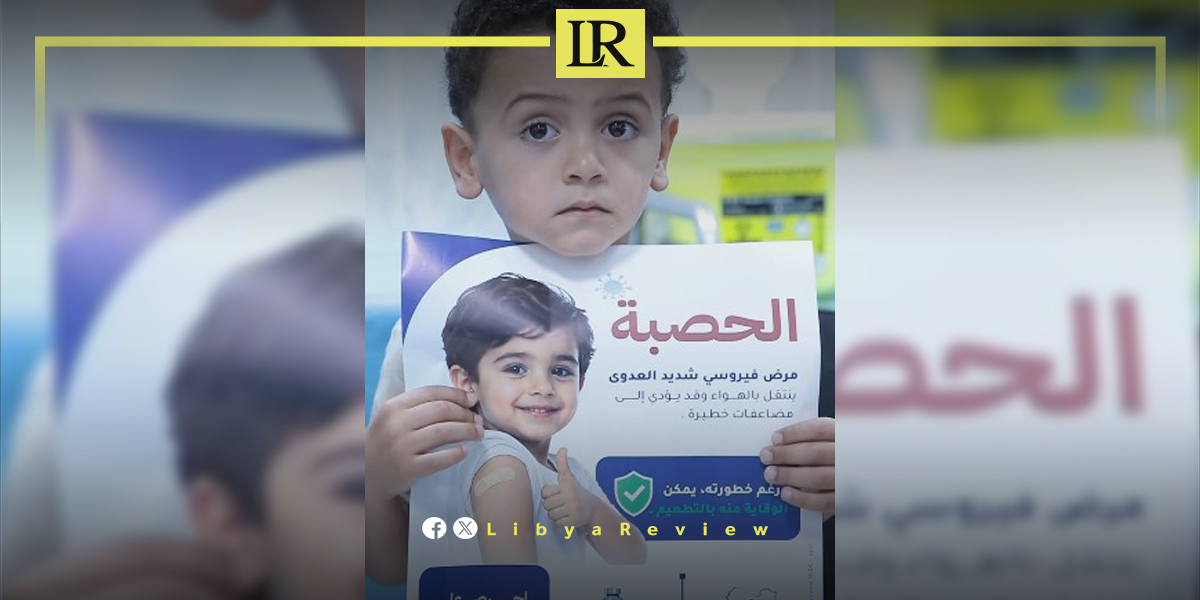
In collaboration with World Health Organization and UNICEF, Libya’s National Center for Disease Control has officially launched a partial vaccination campaign against measles and rubella across several Libyan cities.
The campaign began on 16 May 2026 and will continue until 21 May 2026 as part of ongoing efforts to strengthen public health protection and increase immunization coverage among children.
Libya has been in chaos since a NATO-backed uprising toppled longtime leader Muammar Gaddafi in 2011. The county has for years been split between rival administrations.
Libya’s economy, heavily reliant on oil, has suffered due to the ongoing conflict. The instability has led to fluctuations in oil production and prices, impacting the global oil market and Libya’s economy.
The conflict has led to a significant humanitarian crisis in Libya, with thousands of people killed, and many more displaced. Migrants and refugees using Libya as a transit point to Europe have also faced dire conditions.
The planned elections for December 2021 were delayed due to disagreements over election laws and the eligibility of certain candidates. This delay has raised concerns about the feasibility of a peaceful political transition.
Despite the ceasefire, security remains a significant concern with sporadic fighting and the presence of mercenaries and foreign fighters. The unification of the military and the removal of foreign forces are crucial challenges.

