
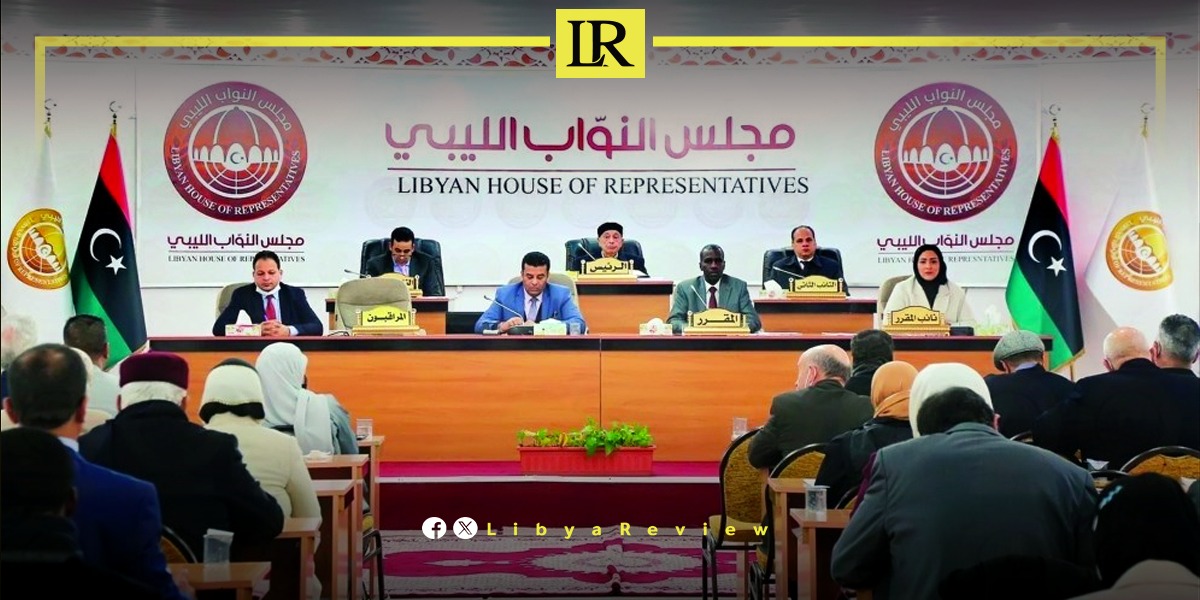
Libya’s House of Representatives has advanced discussions of a draft law to strengthen the country’s efforts to combat money laundering and terrorist financing, aiming to enhance financial transparency and align national legislation with international standards.
Second Deputy Speaker Misbah Douma led the discussions during a meeting at the parliament headquarters. The session brought together senior lawmakers and financial experts to review the proposed legislation and address observations that could contribute to its final approval.
Among the participants were Chairman of the Planning, Finance, and Budget Committee Omar Tantoush, Chairman of the Legislative and Constitutional Committee Ramadan Shambesh, and Ahmed Bougaighis, Head of the Financial Information Unit at the Central Bank of Libya. The meeting focused on reviewing legal and technical aspects of the draft law and ensuring that its provisions meet the requirements of modern financial governance.
Officials examined a range of measures intended to strengthen oversight of financial transactions, improve mechanisms for detecting suspicious activities, and enhance cooperation between regulatory authorities, financial institutions, and law enforcement agencies.
The proposed law is expected to provide stronger tools for preventing illicit financial flows and addressing crimes that could threaten economic stability and national security.
Participants also discussed the importance of harmonizing Libya’s legal framework with internationally recognized standards and recommendations related to anti-money laundering and counterterrorism financing. Such reforms are considered essential for improving confidence in the country’s financial system and strengthening its relationships with international banking and financial institutions.
The meeting forms part of broader legislative efforts aimed at modernizing Libya’s financial and regulatory environment. Lawmakers stressed the need to complete the legal procedures required for the adoption of the bill, describing it as an important step toward enhancing transparency, accountability, and financial integrity.

