
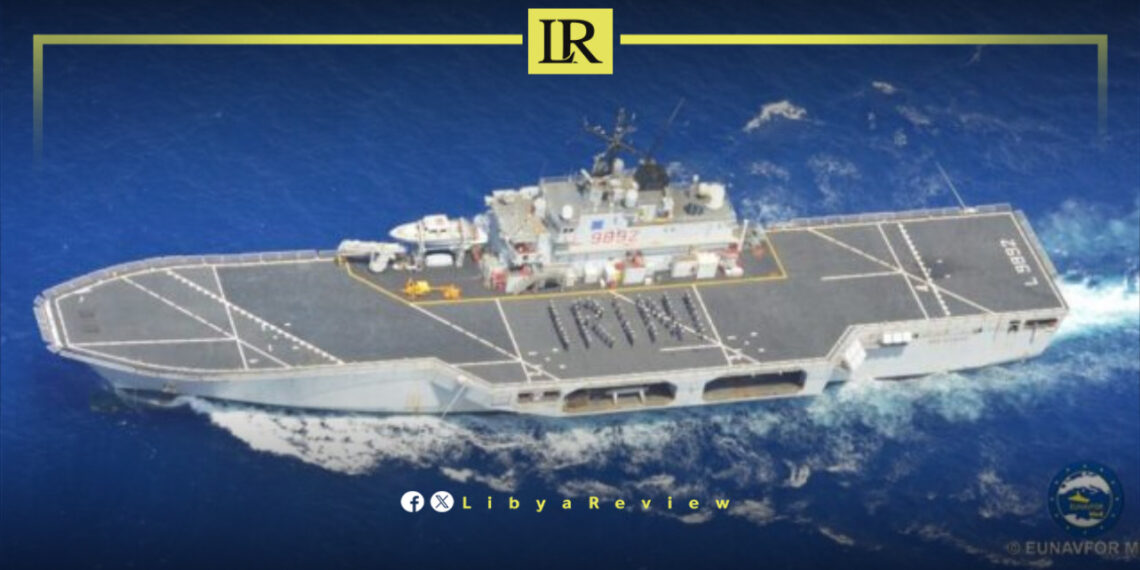
Libya has once again found itself at the center of international geopolitical tensions following the EU’s decision to expand the mandate of Operation IRINI, the naval mission originally established to enforce the UN arms embargo on Libya.
The move has triggered criticism from China and strong warnings from Russia, which argue that the expanded mission risks increasing tensions in the Mediterranean.
The EU recently approved new powers for Operation IRINI, allowing participating naval forces to stop, board, inspect, and potentially detain foreign vessels suspected of transporting Russian oil as part of what European officials describe as Moscow’s “shadow fleet.”
Brussels said the measure is intended to limit Russia’s ability to finance its military operations in Ukraine through energy exports.
EU foreign policy chief Kaja Kallas announced that member states had authorized warships participating in the mission to carry out direct inspections of suspicious vessels.
The decision significantly broadens the operation’s responsibilities beyond its original focus on monitoring the arms embargo on Libya and combating illicit trafficking across the Mediterranean.
China swiftly criticised the move. Foreign Ministry spokesman Lin Jian stated that Beijing opposes unilateral sanctions that are not based on international law or approved by the UN Security Council. Chinese officials warned that such measures could undermine international norms and contribute to further instability.
Russia also reacted sharply. Konstantin Basyuk, deputy chairman of the Russian Federation Council Committee on Defense and Security, warned that efforts to detain or inspect Russian-linked oil tankers could increase the risk of confrontation. He argued that European governments continue to prioritize pressure and escalation over long-term security arrangements and diplomatic solutions.
The controversy comes amid growing international scrutiny of Russia’s so-called shadow fleet, a network of vessels accused by Western governments of helping Moscow bypass sanctions imposed since the start of the war in Ukraine.
The issue gained additional attention after the tanker Arctic Medgaz was reportedly targeted by a drone attack off the Libyan coast last year, with Ukrainian officials later claiming responsibility.

