
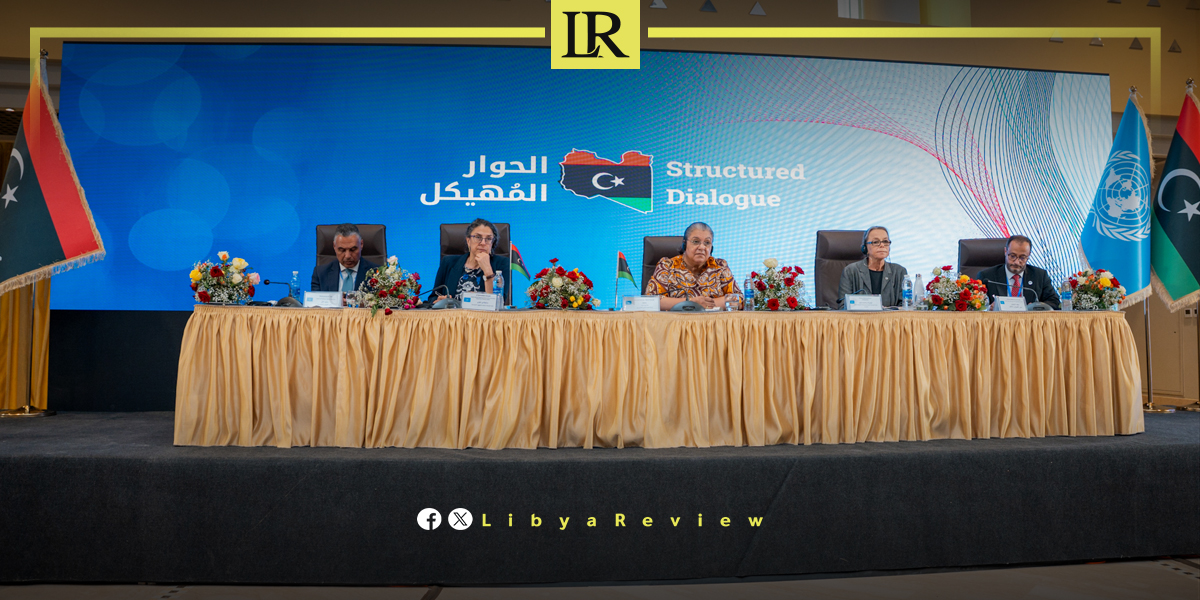
Economic experts participating in Libya’s Structured Dialogue have warned that meaningful economic reform will remain out of reach without political consensus and the reunification of state institutions, arguing that continued political divisions threaten the country’s long-term financial stability.
The assessment was presented during an online interactive session organized by the United Nations Support Mission in Libya (UNSMIL), where members of the dialogue’s economic track discussed the country’s economic outlook and outlined recommendations aimed at addressing Libya’s persistent structural challenges.
Participants said their review of Libya’s economy between 2012 and 2025 revealed a series of long-standing weaknesses, including excessive dependence on oil revenues, rising public debt, increasing current expenditure at the expense of development spending, weak governance, limited transparency, and the continued absence of reliable economic data.
The experts warned that maintaining current policies without comprehensive reforms could further expand public debt, increase pressure on state finances and foreign exchange reserves, and undermine the stability of the Libyan dinar.
Among the key recommendations presented were reforms to public financial management, stronger governance in the oil and energy sectors, diversification of national income sources, balanced regional development, modernization of economic policies, and improved transparency and accountability across public institutions.
The dialogue also emphasized the need to strengthen state institutions, improve the management of public resources, expand private sector participation, and reduce Libya’s dependence on hydrocarbons as the country’s primary source of income.
Participants further highlighted the importance of promoting local development through greater decentralization, upgrading infrastructure and public services, creating employment opportunities for young people, encouraging entrepreneurship, aligning education with labor market needs, and increasing the use of digital technologies and artificial intelligence to support economic growth.
The experts concluded that the recommendations developed through the Structured Dialogue provide a practical framework for future economic policymaking. However, they stressed that implementation will depend on achieving political consensus, reunifying Libya’s institutions, strengthening governance, improving transparency, and ensuring the availability of accurate economic data.
They added that sustainable economic reform requires coordinated political and institutional action, warning that without broad agreement among Libya’s competing authorities, efforts to modernize the economy and strengthen financial stability are unlikely to achieve lasting success.

