
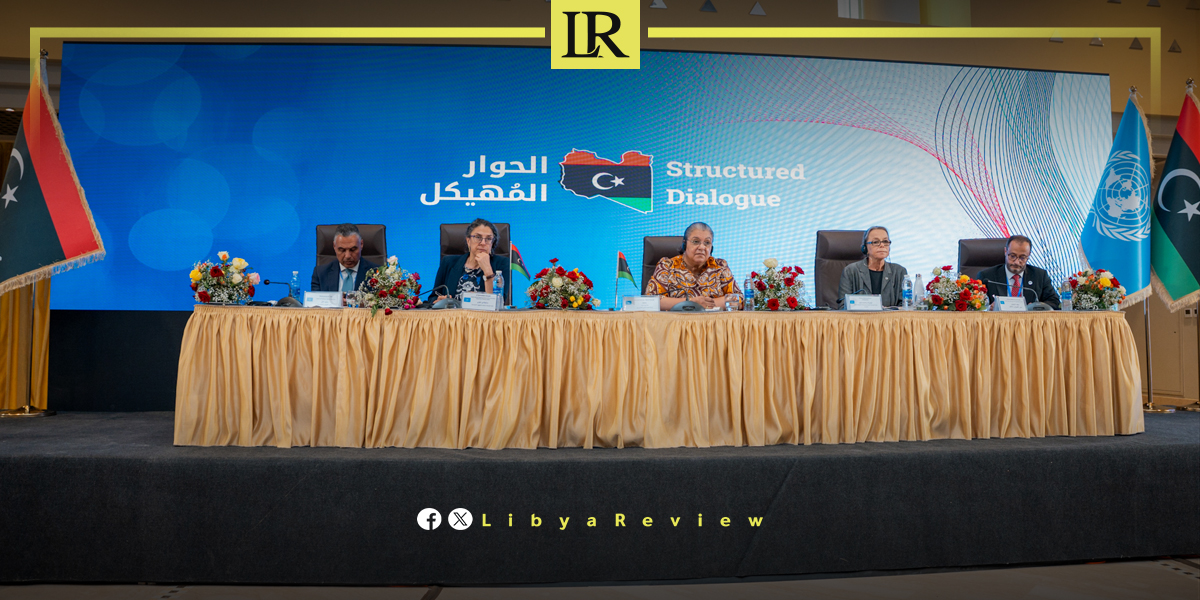

The United Nations Support Mission in Libya (UNSMIL) has outlined a comprehensive roadmap for reforming Libya’s security sector, with participants in the Structured Dialogue emphasizing that sustainable peace, credible elections, and long-term stability will depend on political consensus and the reunification of the country’s military and security institutions.
The recommendations were presented during an online meeting of the dialogue’s security track, where participants discussed proposals aimed at strengthening national security, preserving the ceasefire, preventing renewed conflict, and creating the conditions necessary for credible national elections.
Opening the session, House of Representatives member and security track participant Musab Al-Abed outlined the group’s vision and methodology, explaining that the initiative aims to develop a national framework to enhance security and stability, support the electoral process, prevent conflict, and preserve the ceasefire. He also stressed the importance of establishing a unified national military and security doctrine based on the rule of law and strong state institutions.
The security track brought together military, security, political, legal, and civil society representatives from across Libya, including women, young people, and persons with disabilities. Its work focused on four interconnected priorities: election security, conflict prevention and ceasefire monitoring, security sector governance, and the reunification of Libya’s military and security institutions.
Participants agreed that successful elections require political consensus, a clear legal framework, unified security arrangements, and guarantees to ensure the integrity of the electoral process and public acceptance of the results. They also called for stronger coordination with the High National Elections Commission, greater involvement of civil society, and increased participation by women and young people.
The dialogue further recommended strengthening the Joint Military Commission (5+5), establishing national mediation and early warning mechanisms, advancing disarmament, demobilization, and reintegration programs, and restructuring Libya’s security institutions through stronger governance, oversight, and accountability.
Participants stressed that the greatest obstacle to security sector reform remains political rather than technical, arguing that previous initiatives have stalled because of the lack of political will. They called for measurable implementation mechanisms, stronger institutional coordination, and the creation of unified military and security institutions operating under a single civilian-led state authority.
The security track is part of the broader UN-facilitated Structured Dialogue, which has brought together around 120 Libyan participants since December 2025 across four thematic tracks covering governance, the economy, security, and national reconciliation and human rights. Its recommendations were later presented to nearly 200 participants, including diplomats and UNSMIL officials, as part of ongoing efforts to support Libya’s political process, institutional reunification, and long-term stability.