
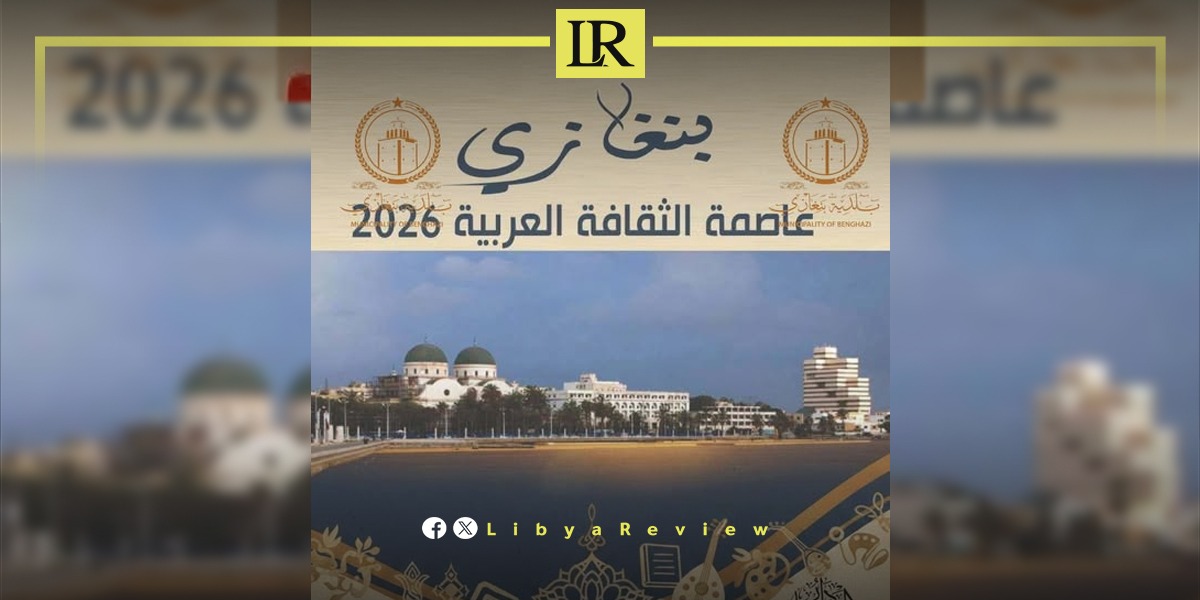

Benghazi will officially launch its Arab Capital of Culture 2026 programme on 16 September, with a year-long calendar of cultural, artistic, and academic events designed to celebrate the city’s heritage and strengthen its presence on the Arab cultural scene.
The organising committee is continuing its preparations after Benghazi was selected as Arab Capital of Culture by the Arab League Educational, Cultural and Scientific Organization. The committee is working to complete arrangements for the events in line with the approved timetable.
The programme will include several major events running through the final months of the year. The Jaber Osman Children’s Festival will take place from 18 to 21 September, followed by the Arab University Theatre Festival from 15 to 22 November. The Comedy Festival is scheduled from 14 to 23 December.
The National Library will host visual arts activities from 15 to 25 October, alongside a photography exhibition organised by Barah Organization. A book fair will be held from 1 to 10 November, while a discounted book fair is scheduled from 25 September to 5 October.
The programme will also include a seminar on intellectual property rights on 7 October, celebrations for World Arabic Language Day from 18 to 20 December, and the Al-Jaber Cultural Sessions from 11 to 18 November. These sessions will include activities focused on writing, reading, and the arts.
Further events are still being finalised across several fields, including theatre, Maalouf music, Muwashahat, folk songs, Arab and Libyan music, folk poetry, equestrian heritage, and Libyan identity.
The second edition of the Benghazi Short Film Festival is also expected to form part of the wider cultural calendar, adding a cinematic dimension to the city’s programme.
The 2026 celebration is expected to give Benghazi a wider cultural platform, bringing together writers, artists, performers, academics, and cultural organisations. It also aims to present the city’s historical depth, creative energy, and role in Libya’s cultural life to audiences across the Arab world.