
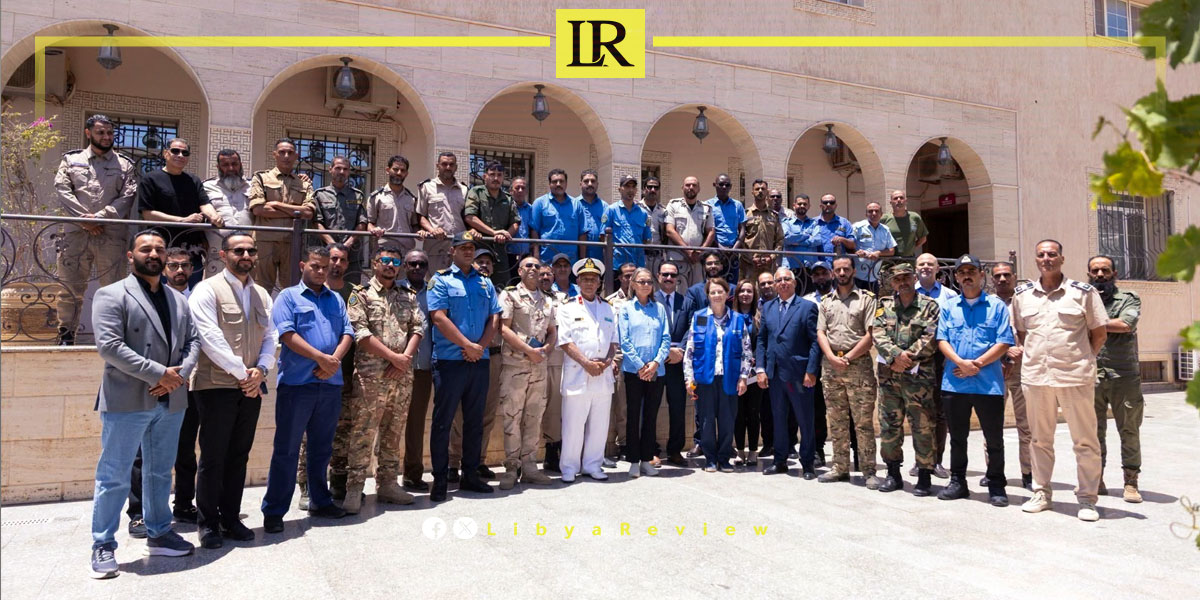
A United Nations delegation has continued its joint mission to eastern Libya with a visit to several development projects in Benghazi, reviewing initiatives aimed at improving education, empowering women, strengthening community services, and building institutional capacity.
The delegation was led by Ulrika Richardson, Deputy Special Representative of the UN Secretary-General and UN Resident Coordinator in Libya.
The visit formed part of the UN’s ongoing engagement with local authorities and communities to assess projects implemented by various UN agencies and identify opportunities for expanded cooperation.
One of the delegation’s first stops was the Beity Center, supported by the United Nations Children’s Fund (UNICEF).
The center provides children with educational programs in Arabic, English, mathematics, and digital literacy, while also offering psychosocial support in a safe learning environment. During the visit, UN officials met community representatives to discuss the challenges facing children and families and explore ways to strengthen educational and social services.
The delegation also toured a community center supported by the United Nations Population Fund (UNFPA), where women and girls receive essential services and participate in vocational training and skills-development programs. The center also supports Libyan civil society organizations working to improve community resilience and expand opportunities for women.
At Al-Aqsa Secondary School for Girls, the delegation reviewed classrooms, a library, and a theater renovated through a joint project supported by the International Organization for Migration (IOM) and the European Union. The upgraded facilities serve more than 860 students.
Officials also met female police officers participating in an English-language training program organized by IOM with support from the Czech Republic.
The visit concluded with a stop at a maritime communications training program organized by the United Nations Office on Drugs and Crime (UNODC) and funded by the European Union. The initiative provides specialized training for more than 40 maritime law enforcement officers and port personnel, focusing on operational coordination, modern communication systems, and adherence to international human rights standards.
At the end of the mission, the UN delegation reaffirmed its commitment to working with Libyan partners to strengthen institutions, improve public services, support education and vocational training, and expand opportunities for children, women, and young people.

