
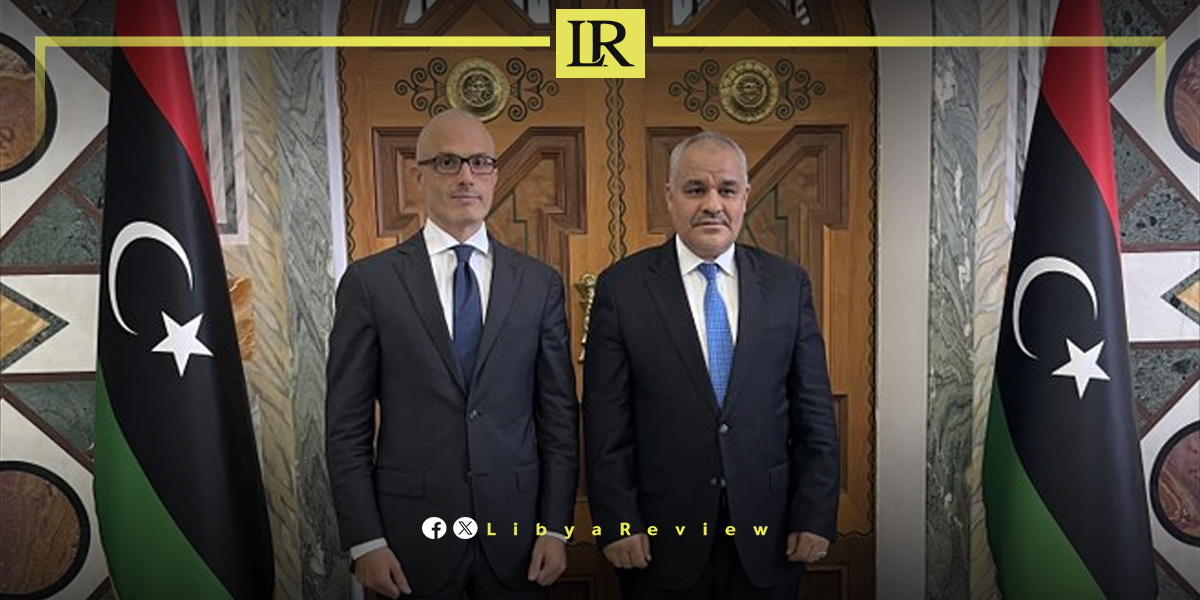
European Union Ambassador to Libya Nicola Orlando held a productive meeting in Tripoli yesterday with Central Bank Governor H.E. Naji Issa to discuss Libya’s mounting economic challenges.
During the discussions, Orlando emphasized the urgent need for currency stability and inflation control amid rising public expenditures. Both agreed on the essential role of fiscal responsibility across institutions and highlighted the necessity for the House of Representatives to adopt a unified, transparent, and accountable public spending framework.
The meeting reaffirmed the critical importance of safeguarding the independence, integrity, and effectiveness of Libya’s economic and regulatory institutions—starting with the Central Bank. Orlando stated that this institutional strength is vital for the country’s future economic resilience.
This high-level engagement comes amid broader EU-supported efforts through the Berlin Process and initiatives backed by institutions like UNSMIL and the Central Bank to push for systemic financial reforms and foster a unified national budget—an essential step toward stabilizing Libya’s economy.
The EU ambassador’s visit reflects increasing global diplomatic backing for Libya’s economic reform agenda, with the aim of building trust in financial governance, combating inflation, and ensuring long-term economic sustainability.
Libya has been in chaos since a NATO-backed uprising toppled longtime leader Muammar Gaddafi in 2011. The county has for years been split between rival administrations.
Libya’s economy, heavily reliant on oil, has suffered due to the ongoing conflict. The instability has led to fluctuations in oil production and prices, impacting the global oil market and Libya’s economy.
The conflict has led to a significant humanitarian crisis in Libya, with thousands of people killed, and many more displaced. Migrants and refugees using Libya as a transit point to Europe have also faced dire conditions.
The planned elections for December 2021 were delayed due to disagreements over election laws and the eligibility of certain candidates. This delay has raised concerns about the feasibility of a peaceful political transition.
Despite the ceasefire, security remains a significant concern with sporadic fighting and the presence of mercenaries and foreign fighters. The unification of the military and the removal of foreign forces are crucial challenges.

