
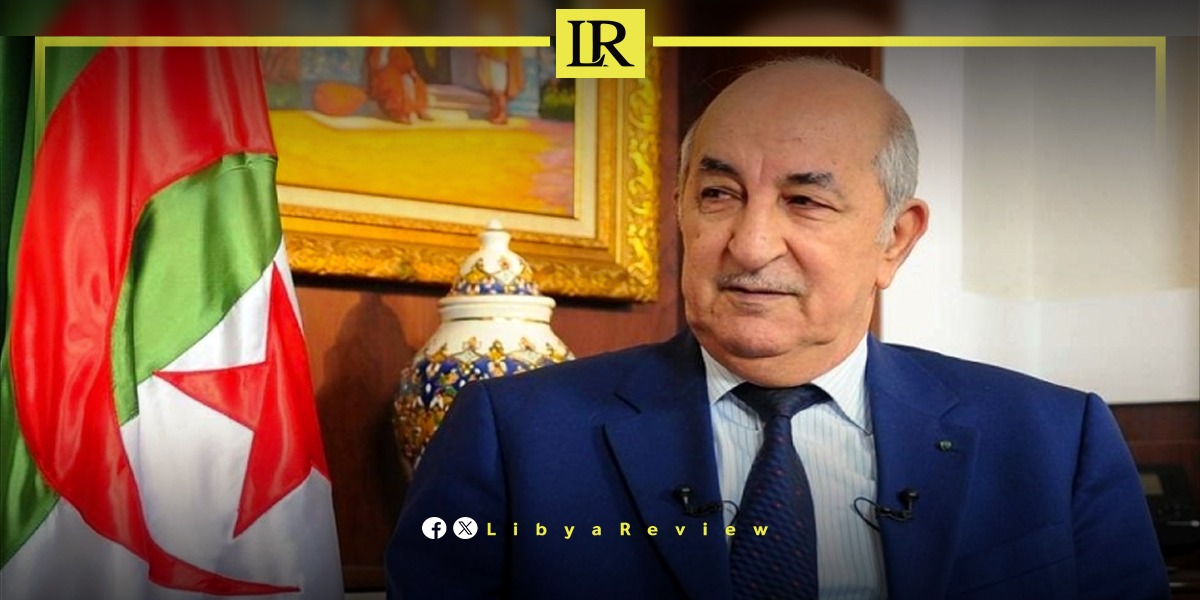
President Tebboune Reaffirms Non-Intervention Policy Amid Regional Tensions
Algerian President Abdelmadjid Tebboune has reaffirmed his country’s commitment to non-interference in the internal affairs of neighboring countries, including Libya, stressing that regional stability can only be achieved through respect for national sovereignty.
In remarks addressing regional and international developments, President Tebboune stated that Algeria firmly rejects all forms of foreign interference in countries such as Mali, Niger, Burkina Faso, and Libya, calling for diplomatic solutions grounded in mutual respect and sovereignty.
Support Without Conditions
Tebboune also expressed Algeria’s readiness to support Libya and other neighboring countries, underlining that such support is based on a foreign policy rooted in calm diplomacy, mutual respect, and rejection of imposed agendas.
“We stand ready to assist our brothers, but without conditions or interference,” Tebboune said, highlighting Algeria’s preference for quiet diplomacy and constructive engagement as tools to resolve conflicts in the region.
Algeria has long positioned itself as a neutral mediator in North African and Sahel conflicts, while maintaining strong opposition to military or foreign interventionism.
Libya has been in chaos since a NATO-backed uprising toppled longtime leader Muammar Gaddafi in 2011. The county has for years been split between rival administrations.
Libya’s economy, heavily reliant on oil, has suffered due to the ongoing conflict. The instability has led to fluctuations in oil production and prices, impacting the global oil market and Libya’s economy.
The conflict has led to a significant humanitarian crisis in Libya, with thousands of people killed, and many more displaced. Migrants and refugees using Libya as a transit point to Europe have also faced dire conditions.
The planned elections for December 2021 were delayed due to disagreements over election laws and the eligibility of certain candidates. This delay has raised concerns about the feasibility of a peaceful political transition.
Despite the ceasefire, security remains a significant concern with sporadic fighting and the presence of mercenaries and foreign fighters. The unification of the military and the removal of foreign forces are crucial challenges.

