
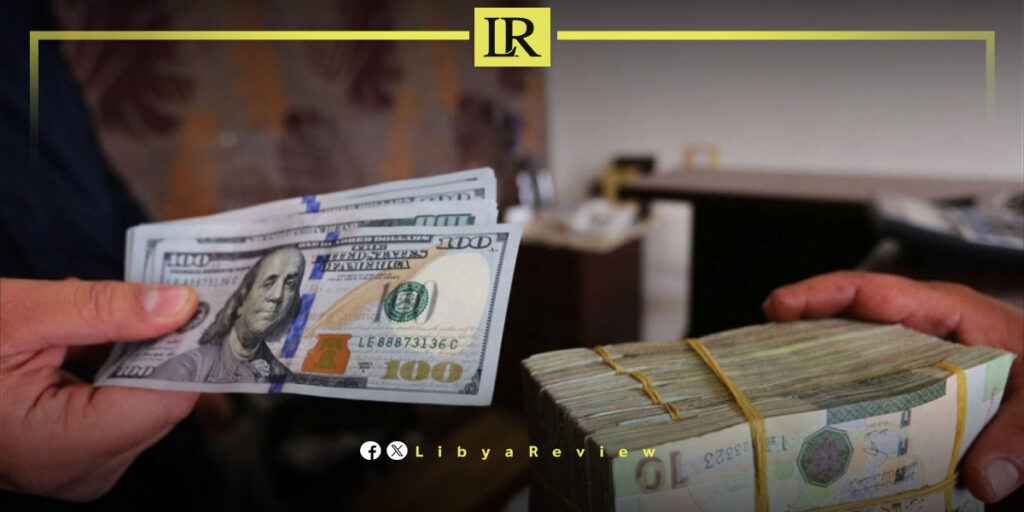
Libya’s Central Bank has announced a 14.7% devaluation of the Libyan dinar, a move aimed at addressing mounting economic pressures and restoring monetary stability amid deep political divisions.
In a statement issued on Sunday, the Central Bank of Libya said the dinar’s exchange rate was adjusted against the International Monetary Fund’s Special Drawing Rights (SDR), lowering its value from 0.1348 SDR to 0.1150 SDR per dinar. The decision follows recommendations by the Monetary Policy Committee during its first meeting of 2026 and subsequent approval by the bank’s board.
The adjustment comes as the dinar has weakened sharply on the parallel market in recent days, coinciding with rising prices of basic goods. The US dollar briefly exceeded nine dinars before retreating to around 8.7 dinars, while the official rate now stands at about 6.36 dinars per dollar following the devaluation.
The central bank cited several structural challenges behind the move, including the continued absence of a unified state budget, unsustainable growth in public spending, and dual expenditure outside regulated fiscal frameworks. It warned that unchecked spending has placed increasing strain on Libya’s financial capacity and foreign reserves.
External factors have also weighed heavily on the economy. Falling global oil prices have reduced Libya’s oil revenues, the country’s primary source of income, limiting the state’s ability to finance imports and public obligations.
As part of the policy shift, the Monetary Policy Committee approved a package of monetary and commercial reforms designed to regulate currency exchange activities, contain the parallel market, protect reserves, and support exchange rate stability.
Economists say the devaluation could help narrow the gap between official and unofficial rates, but warn it may further fuel inflation if not accompanied by broader fiscal discipline.
Libya continues to record high inflationary pressures, with households struggling under rising living costs and weaker incomes.

