
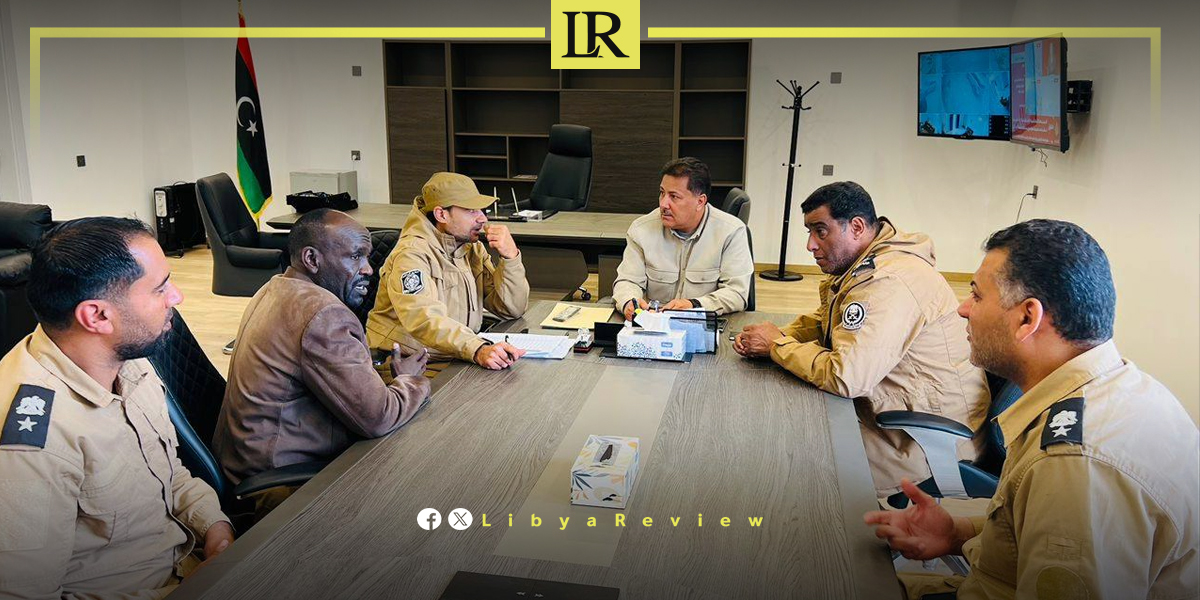
Officials from Libya’s Anti-Illegal Migration Agency held an expanded meeting in Benghazi on Thursday to discuss accelerating deportation procedures for irregular migrants and strengthening coordination with the Sudanese Consulate to address pending cases.
The meeting, which took place at the Benghazi Greater Branch of the agency, focused on practical measures to speed up the deportation of migrants who are ill, individuals subject to security restrictions, and those against whom formal deportation orders have already been issued.
Participants also examined procedures for deporting migrants detained during security campaigns conducted by the agency in coordination with other security bodies. These operations have targeted individuals residing in Libya without legal documentation, as well as cases involving begging across various nationalities.
Officials emphasized the importance of improving administrative and logistical mechanisms to ensure that deportation procedures are carried out more efficiently while remaining consistent with Libya’s legal and humanitarian frameworks.
A key focus of the meeting was the situation of the Sudanese community in eastern Libya. Discussions explored ways to enhance cooperation and coordination between the Sudanese Consulate and the Anti-Illegal Migration Agency in Benghazi in order to facilitate the repatriation of Sudanese nationals whose legal status requires deportation.
Attendees highlighted that closer collaboration between Libyan authorities and diplomatic missions can help address complicated or delayed cases, particularly those involving migrants who require documentation or consular verification before deportation can be carried out.
Officials noted that strengthening communication channels with the Sudanese Consulate would help streamline procedures and ensure that cases are processed more quickly and in accordance with relevant legal standards.
The meeting concluded with participants stressing the importance of continued cooperation between Libyan authorities and diplomatic representatives. They underlined that joint coordination is essential to organizing the status of migrant communities and resolving outstanding deportation cases while maintaining respect for legal procedures and humanitarian considerations.
Libya remains a key transit and destination point for migrants from Africa and other regions seeking to reach Europe, making migration management a persistent challenge for local authorities and international organizations. Meetings such as the one held in Benghazi aim to improve coordination mechanisms and facilitate the orderly handling of migration-related cases across the country.

