
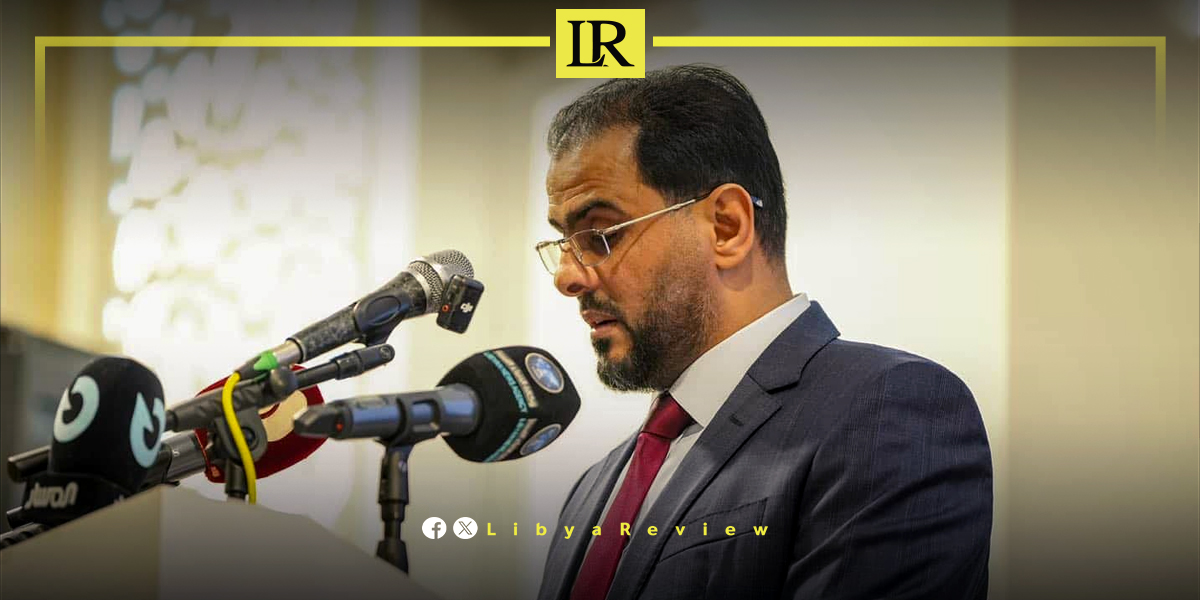
Prime Minister of the Libyan Government-designate Osama Hammad has called on the head of the outgoing Government of National Unity Abdel-Hamid Dbaiba to relinquish power in order to help resolve Libya’s ongoing executive division and pave the way for the formation of a unified national government.
In a statement issued from Benghazi, Hammad urged both rival administrations to withdraw from power and allow the establishment of a consensus-based government capable of unifying state institutions and preparing the country for long-awaited national elections.
The statement, released as Government Resolution No. (3) of 2026, framed the proposal as a necessary step toward ending Libya’s prolonged political fragmentation. Hammad said that stepping aside by both administrations would help facilitate a transitional phase aimed at restoring institutional unity and creating conditions suitable for holding national electoral processes.
Call to End Libya’s Political Division
Hammad stressed that the persistence of competing governments has continued to deepen Libya’s political crisis. Since 2022, the country has faced an ongoing executive split between the administration based in eastern Libya and the Government of National Unity in Tripoli.
According to Hammad, a voluntary withdrawal from power by both sides would open the door for the formation of a unified executive authority agreed upon by political stakeholders. Such a move, he said, would contribute to stabilizing the country’s institutions and advancing preparations for national elections that many Libyans hope will bring an end to the transitional period.
He reiterated that prioritizing the national interest should outweigh political rivalries, warning that maintaining the current executive division could further entrench institutional fragmentation across the country.
Warning Over Forged Government Documents
In the same statement, Hammad warned citizens, media organizations, and social media users against circulating forged documents or communications falsely attributed to his government.
He said that certain documents currently being shared online do not reflect official government correspondence and are entirely fabricated. Hammad added that all legitimate decisions or communications issued by the Prime Minister’s Office are published exclusively through officially recognized channels.
The Libyan Government-designate also urged the public and journalists to verify information carefully before sharing it, noting that spreading unverified materials could mislead public opinion and contribute to political confusion.
Accusations Against Dbaiba’s Media Team
Hammad further accused media figures affiliated with Dbaiba’s administration of being behind the dissemination of the alleged forged documents. He described the effort as a “desperate attempt” to mislead the public and distort the government’s official position.
The statement concluded with a renewed call for Dbaiba to relinquish his position and place Libya’s national interest above political considerations, warning that the continuation of the executive divide risks deepening political fragmentation throughout the country.
Libya has remained politically divided for years between rival administrations and competing institutions, while international efforts continue to push for a unified government capable of organizing nationwide elections and stabilizing the country’s political landscape.

