
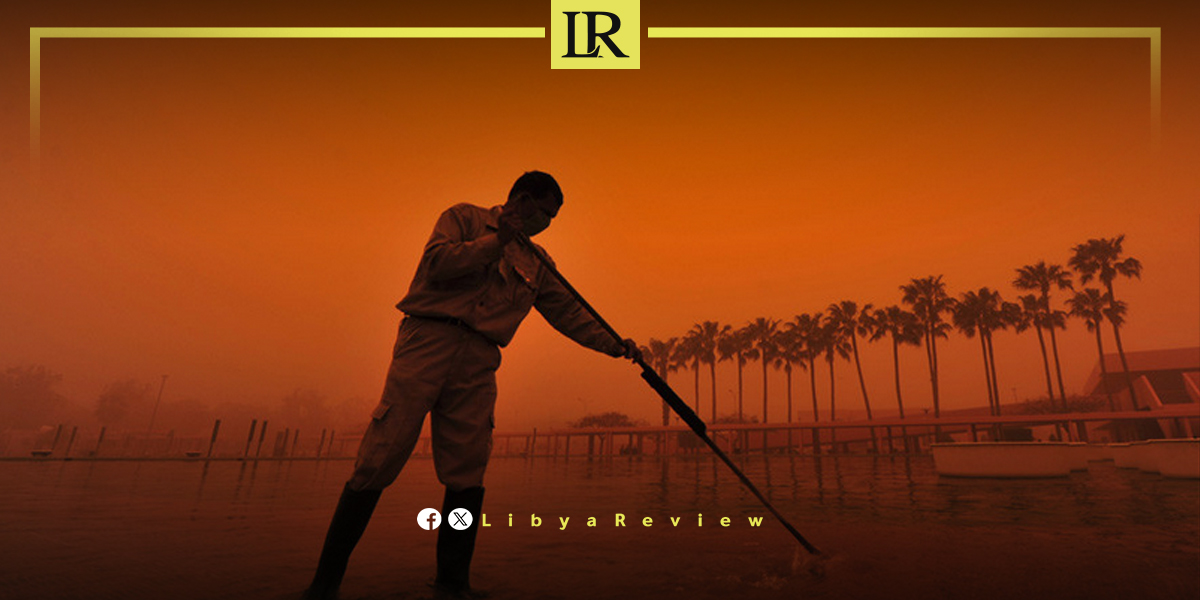

Libya’s eastern city of Tobruk has recorded the highest air pollution levels in the country, according to the Ministry of Environment under the government led by Osama Hammad, as powerful sandstorms continue to sweep across large parts of the country.
Authorities reported that air quality levels in Tobruk surged to an alarming 9,812 micrograms per cubic metre, far exceeding internationally accepted safety thresholds and marking the highest level ever recorded in Libya. The figure surpasses previous pollution records registered in Benghazi, raising serious concerns about environmental and public health risks.
According to the World Health Organization, safe air pollution levels should not exceed 100 micrograms per cubic metre, meaning the levels recorded in Tobruk are nearly 100 times above recommended limits.
The impact of the sandstorms has extended beyond Tobruk, with several other cities also experiencing hazardous air quality. Derna, Kufra, and the Oasis regions have all reported dangerous pollution levels, with authorities warning of worsening conditions if the weather pattern persists.
Health officials have noted a rise in respiratory issues, particularly among children, as fine dust particles continue to spread through the air. Medical experts warn that prolonged exposure to such extreme pollution levels can lead to serious health complications, including breathing difficulties, asthma flare-ups, and long-term lung damage.
The Ministry of Environment has issued urgent calls for residents to follow preventive measures, including limiting outdoor exposure, wearing protective masks, and keeping indoor environments sealed as much as possible.
The warning highlights the growing environmental challenges facing Libya, particularly in regions vulnerable to seasonal sandstorms. Officials stressed the need for greater public awareness and preparedness to mitigate the health impacts of extreme air pollution events.