
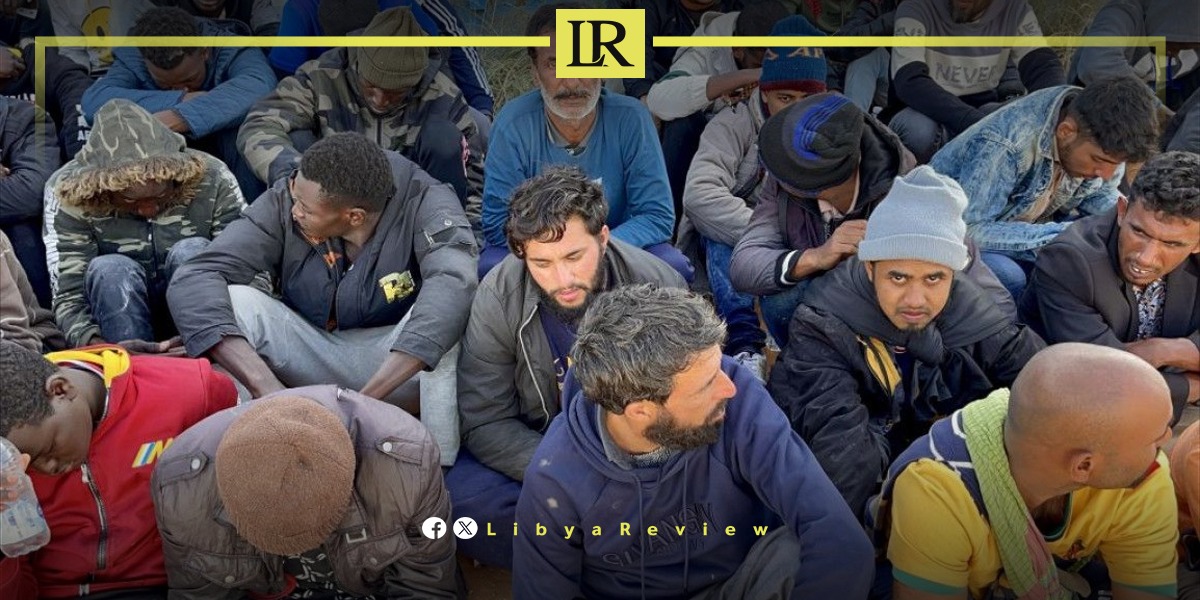
Eastern Libyan authorities announced the rescue of 120 migrants allegedly held captive by human trafficking networks south of Benghazi, highlighting ongoing efforts to combat smuggling operations and organized crime across the region.
According to security officials in Ajdabiya, the operation began after an Egyptian migrant escaped from captivity and was later found exhausted near the coastal area of Bishr, approximately 120 kilometers southwest of Ajdabiya. Authorities said the migrant guided security forces to locations where dozens of migrants of different nationalities were being detained.
Investigators stated that the victims were allegedly held in sites used by traffickers to torture migrants and extort money from their families. Officials reported that victims were subjected to physical abuse and forced to record videos pleading for financial assistance, which were then sent to relatives abroad to pressure them into paying ransom demands.
The security operation reportedly continued for nearly two weeks and resulted in the dismantling of facilities linked to trafficking activities. Authorities also seized equipment believed to be used in smuggling operations, including boats, engines, fuel containers, and what officials described as a small boat construction site. Arrest warrants were issued for suspected traffickers who remain fugitives.
Officials confirmed that the rescued migrants were deported following the operation, although no additional details were provided regarding their destinations or legal status.
In a separate incident, authorities recovered the bodies of three migrants along the Mediterranean coast near Bishr. Officials identified the victims as two Bangladeshi nationals and one Egyptian migrant. A boat was also discovered near the shoreline.
Libya remains one of the primary transit routes for migrants attempting to cross the Mediterranean toward Europe. Years of political instability, weak border control, and security fragmentation have enabled trafficking and smuggling networks to expand across different parts of the country.

