
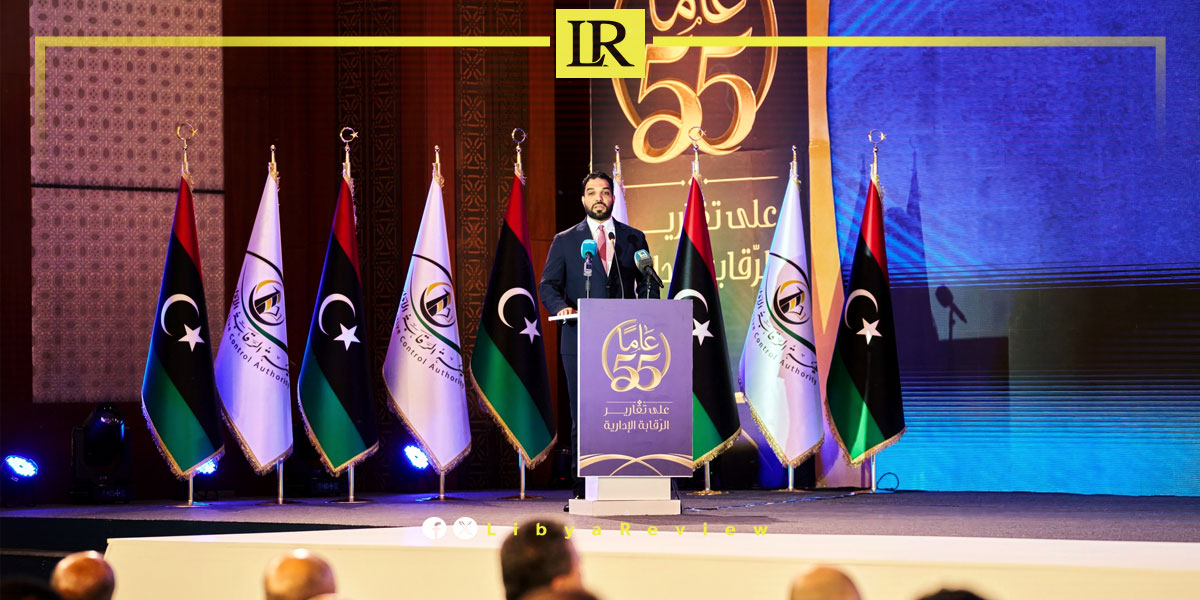
Libya’s total public spending has exceeded one trillion dinars since 2011, according to Abdullah Gaderbouh, who warned that the scale of expenditure reflects deep financial and administrative challenges facing the country.
Speaking at a ceremony marking the 55th anniversary of the Administrative Control Authority’s annual reports and the 76th anniversary of its establishment, Gaderbouh said the authority’s 2024 and 2025 reports presented a detailed overview of Libya’s financial and institutional conditions.
He described the spending figure as alarming, particularly given the continued difficulties affecting public services and economic stability. According to Gaderbouh, years of political division and internal conflict have weakened state institutions and negatively impacted essential sectors such as healthcare, education, and infrastructure.
The authority’s reports documented significant financial and administrative irregularities across multiple sectors. In response, the institution has begun developing Libya’s first integrated national database of its administrative structure. Officials say the initiative aims to identify institutional weaknesses and improve decision-making through more accurate and transparent data.
Gaderbouh explained that the reports covered a wide range of issues, including public spending, government revenues, oil income, investments, and monetary policy. They also examined the condition of major service sectors and infrastructure projects throughout the country.
He stressed that the goal of publishing these findings is not only to present statistics, but also to highlight the seriousness of Libya’s financial situation and encourage coordinated national action to protect state institutions and restore public confidence.
The remarks come amid increasing warnings from economic observers about the long-term impact of uncontrolled public spending, weak economic diversification, and continued dependence on oil revenues. Analysts argue that the absence of comprehensive reforms and unified economic policies continues to place heavy pressure on Libya’s financial stability.

