
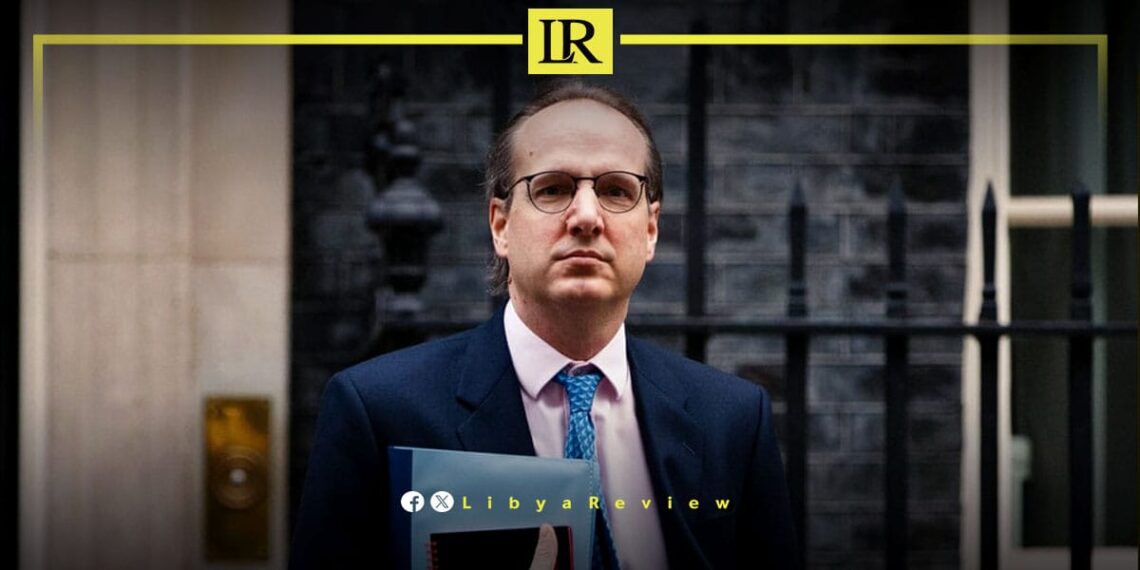
The British Ambassador to Libya, Martin Reynolds, said that change in Libya is unavoidable, emphasizing that the country has enormous economic and strategic potential despite the political and security challenges it continues to face.
In press remarks, Reynolds reflected on his return to Libya in October after first visiting the country in 2010.
He noted that major changes are visible across several Libyan cities, particularly Tripoli, Benghazi, and Sirte, where reconstruction projects and urban development have expanded significantly in recent years.
The ambassador highlighted Libya’s vast oil and gas reserves, strategic location, and educated population as key advantages capable of supporting long-term economic growth and stability. However, he warned that corruption, lack of transparency, and the ongoing political division between eastern and western Libya continue to weaken institutions and delay sustainable progress.
Reynolds also pointed to persistent security concerns, including clashes involving armed groups, organized crime networks, and weaknesses in rule-of-law institutions. He added that many Libyans continue to face difficult economic conditions amid currency depreciation and rising living costs.
The British diplomat reaffirmed the United Kingdom’s commitment to supporting Libya’s efforts to build unified and effective state institutions capable of serving all citizens. He welcomed the recent agreement between the House of Representatives and the High Council of State on the country’s first unified budget in more than 13 years, describing it as a positive step toward greater institutional coordination.
Reynolds also praised engagement with the United Nations Support Mission in Libya under the leadership of Hanna Serwaa Tetteh, stressing the importance of continued international support for a lasting political settlement.
He highlighted opportunities for future cooperation between Libya and the United Kingdom in education, technical training, border management, and combating human trafficking and smuggling networks.
The ambassador concluded by saying that lasting progress in Libya will require cooperation among Libyans themselves, alongside constructive support from international partners. He expressed confidence that the country can overcome its longstanding challenges and move toward a more stable and prosperous future.

