
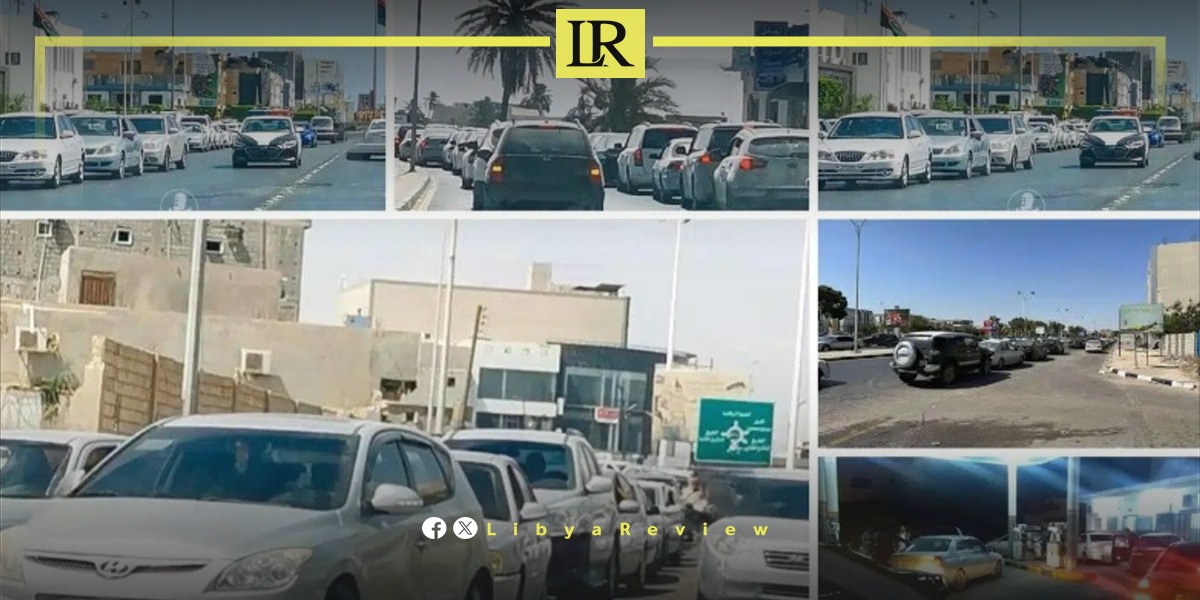
Fuel shortages have intensified across Tripoli and several cities in west Libya, leaving motorists waiting in long queues at fuel stations despite official assurances that supplies remain available and imports continue at record levels.
The situation has raised fresh concerns about fuel distribution, oversight mechanisms, and the growing impact of smuggling activities on the domestic market.
While residents struggle to obtain gasoline and diesel, authorities recently intercepted a truck carrying approximately 12,000 liters of diesel that was allegedly being prepared for illegal trafficking.
The seizure was carried out by patrols from the Anti-Financial Crimes, Money Laundering and Terrorism Financing Agency as part of broader efforts to combat fuel smuggling and market manipulation.
Officials said immediate legal measures were taken against those involved.
The shortages come despite significant spending on fuel imports.
According to statements made by the chairman of the National Oil Corporation, Libya’s expenditure on fuel and refined petroleum products exceeded $1 billion during May alone.
The same official revealed that 17 gasoline tankers were contracted during the month, representing the highest monthly fuel import rate in the corporation’s history.
The figures suggest that supply volumes remain substantial, raising questions about why shortages continue to affect fuel stations across western Libya.
Authorities have increasingly focused on distribution networks and station operations. Inspection campaigns launched in Greater Tripoli since Friday involved multiple security agencies, including fuel facility protection units, internal security forces, and specialized anti-financial crime teams.
According to officials, inspections targeted stations suspected of violating distribution regulations through partial closures, withholding fuel sales, or limiting access despite having available supplies.
Such practices are believed to have contributed to worsening congestion and longer waiting times for consumers.

