
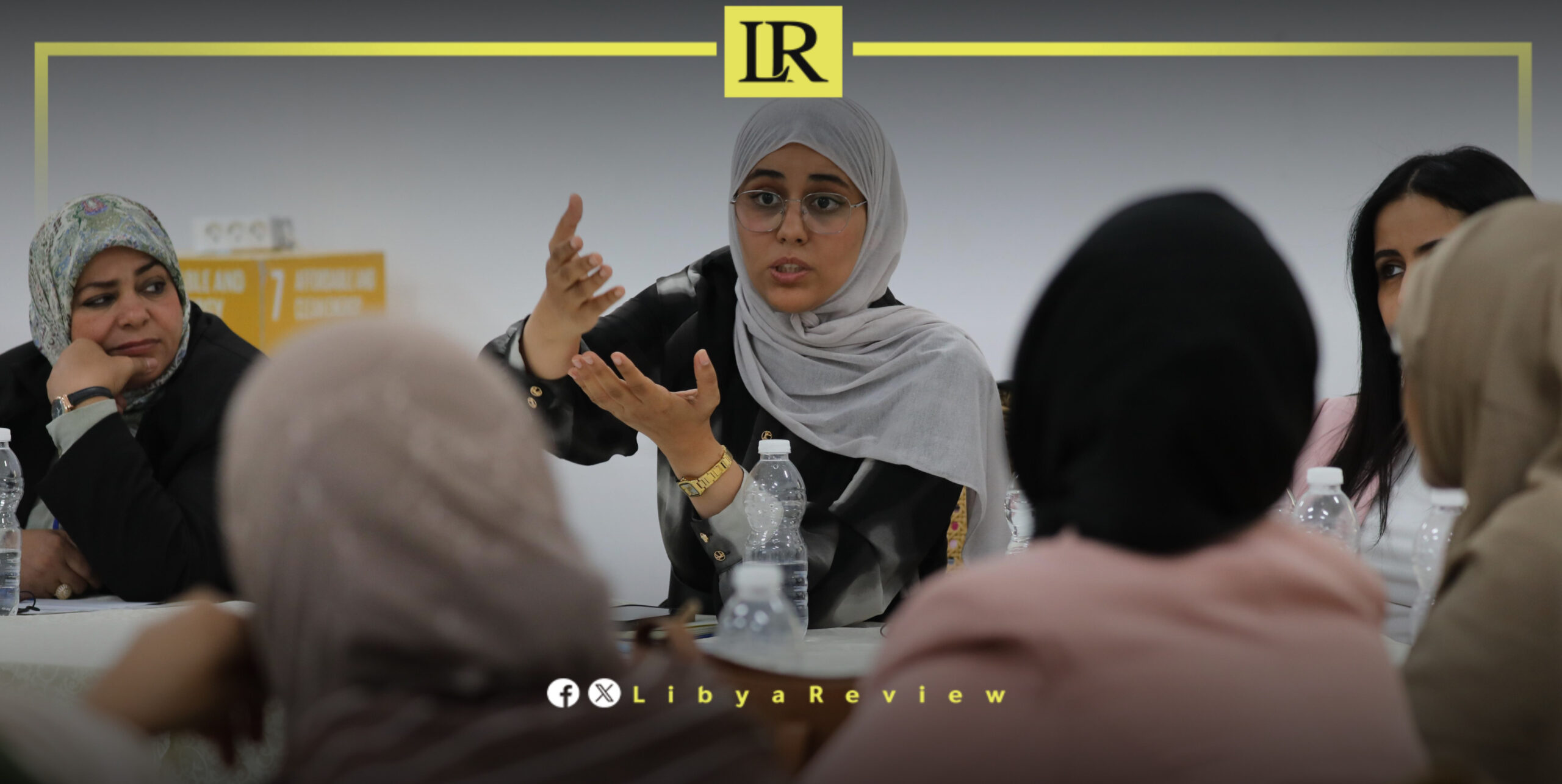
More than 25 Libyan women participating in a discussion forum organised by the United Nations Support Mission in Libya (UNSMIL) and UN Women have stressed that increasing women’s participation in conflict prevention and community peace initiatives would strengthen their effectiveness and contribute to long-term stability.
The forum, held in Tripoli on 19 and 20 May, brought together women from a wide range of sectors and communities across Libya to discuss their role in supporting ceasefire efforts and promoting social peace. Participants included members of the House of Representatives, the High Council of State, the Structured Dialogue initiative, and civil society organisations from Jufra, Zawiya, Ghrayfa, Ubari, Bent Baya, Benghazi, Derna, Sebha, Tripoli, Ghat, and Murzuq.
During the discussions, participants reviewed several research papers and specialised initiatives examining how Libyan women can contribute to reducing conflict and supporting ceasefire efforts across the country.
The participants called for expanding the concept of security to include community-based dimensions and urged greater female involvement in violence prevention, mediation, and peacebuilding programmes. They argued that women’s participation helps address the root causes of conflict, including marginalisation and limited economic opportunities, while reducing the likelihood of renewed violence or recruitment into armed groups.
The attendees also stressed the important role women play in building trust within communities and serving as a bridge between local stakeholders, families, and communities affected by conflict. According to participants, this contribution strengthens the effectiveness and acceptance of reintegration programmes for former combatants.
Sanaa Misbah, an activist from Ubari who took part in the discussions, said women are uniquely positioned within families and communities to identify early behavioural or ideological changes among young people, including signs of radicalisation or tendencies toward violence. She noted that this allows for early intervention before tensions escalate into larger crises.
Participants further stated that involving more women in the planning and implementation of programmes aimed at reducing community violence, managing arms control efforts, and reintegrating former fighters would improve responsiveness to local needs while reducing discrimination and promoting equal access to services. They added that women play a central role in strengthening social cohesion, preserving family and community ties, and supporting sustainable peace initiatives.
Intisar Shneib, a member of the House of Representatives representing Derna, said the current stage requires broader inclusion of women in national peace and stability initiatives. She added that expanding women’s participation would strengthen dialogue, coexistence, and social stability throughout Libya.
On the second day of the forum, Deputy Special Representative of the Secretary-General and Resident Coordinator Ulrika Richardson described the discussions as an important step toward promoting inclusive dialogue and strengthening women’s leadership in peace processes.
Richardson said women are not only affected by conflict and insecurity but are also essential partners in preventing violence and building peace. She noted that their perspectives, networks, and leadership contribute to social cohesion, help address the underlying causes of conflict, and support more sustainable solutions for communities across Libya.
She also warned that hate speech targeting women remains a serious threat to social cohesion and stability. Richardson stressed that mediation should be recognised and institutionalised as a professional skill, while temporary measures such as quota systems could help address existing imbalances. She further called for greater awareness and enforcement of legal frameworks that protect women’s participation.
Despite Libya’s ongoing political divisions, Richardson underlined the importance of building connections, expanding networks, and creating spaces for constructive dialogue throughout the country.
UNSMIL and UN Women reaffirmed their commitment to supporting women as essential actors in peacebuilding, conflict prevention, and efforts to strengthen stability and reconciliation across Libya.

