
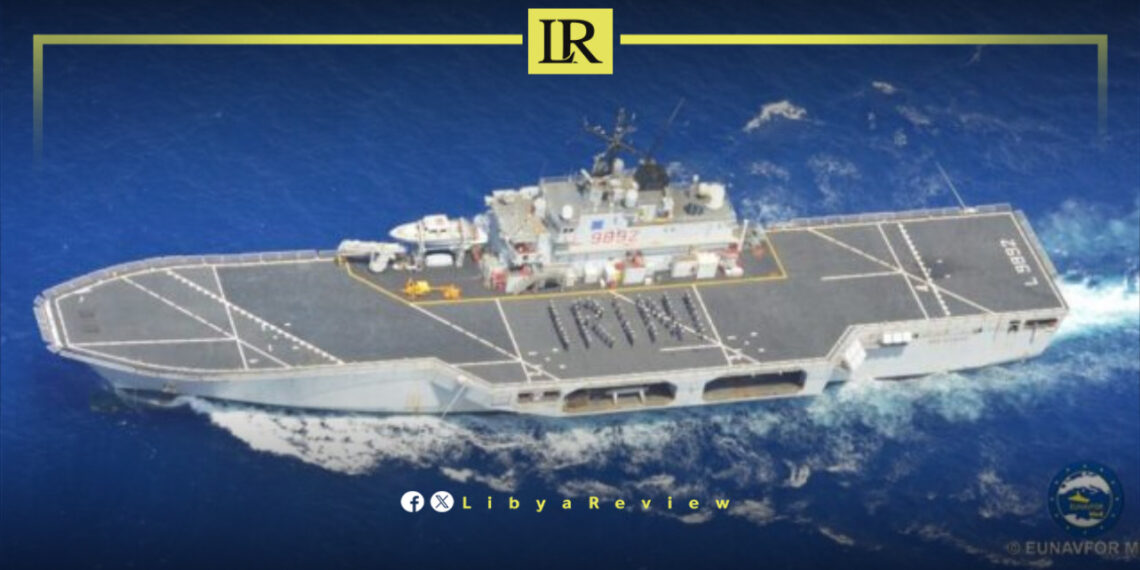
The European Union’s Operation Irini has reported monitoring 60 suspicious flights believed to be linked to possible arms deliveries to Libya, as the mission continues enforcing the UN arms embargo through surveillance and intelligence gathering despite changes to its operational mandate.
According to an operational update cited by Italy’s Nova news agency, Operation Irini carried out 434 radio inspections of commercial vessels during June, while identifying 60 flights considered suspicious.
The mission also conducted three consensual inspections of commercial ships during the month, bringing the total number of voluntary ship inspections conducted since the operation was launched in 2020 to 803.
The mission continues to monitor 25 airports and airstrips as well as 16 ports and oil terminals linked to Libya’s commercial and logistical networks.
In addition to tracking maritime and air traffic, Operation Irini collects intelligence on suspected violations of the UN arms embargo, illicit oil trafficking, and irregular migration routes across the central Mediterranean.
The latest operational update comes after the UN Security Council failed to renew Resolution 2292, which had previously authorized Operation Irini to conduct compulsory inspections of vessels on the high seas suspected of violating the arms embargo on Libya.
Without the renewed mandate, the operation can no longer carry out forced ship inspections but continues to perform surveillance, intelligence collection, and voluntary inspections with the consent of vessel operators.
Despite the reduced enforcement powers, the European Union extended Operation Irini’s mandate until 31 March 2027, expanding its responsibilities to include the protection of critical maritime infrastructure and the enhancement of maritime security awareness across the Mediterranean.
Launched in March 2020, Operation Irini remains the European Union’s primary naval mission supporting the implementation of the UN arms embargo on Libya.
While its role has shifted following the expiration of the Security Council authorization, the mission continues to monitor maritime and air activity connected to Libya, providing intelligence and operational reporting to help detect suspected arms trafficking and other illicit cross-border activities in the region.

