
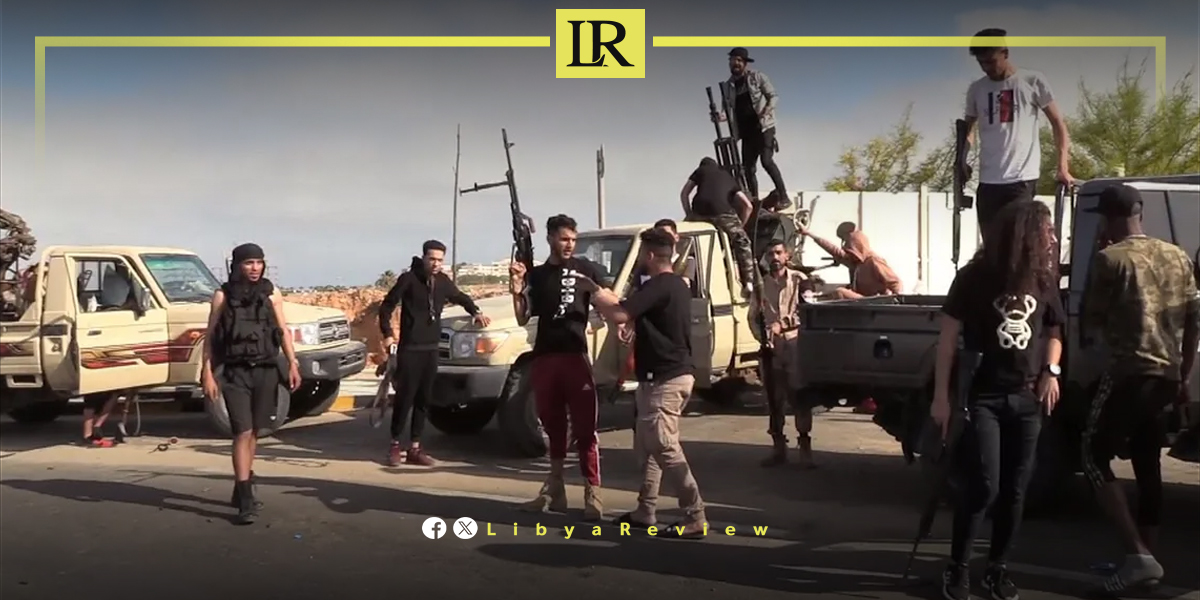
Libya’s western regions remain entrenched in chaos and insecurity, despite the allocation of $12 billion in security spending by the Government of National Unity (GNU) and the Presidential Council in 2024.
This staggering figure, intended to bolster police forces, armed group management, and defense structures, has failed to yield meaningful results on the ground. Violent clashes between militias, rampant crime, and a lack of basic law enforcement continue to define the security landscape in the West.
The Central Bank of Libya’s 2024 report shed light on how these funds were distributed. The Ministry of Interior received 5.8 billion Libyan dinars, while the Ministry of Defense, under the direct oversight of Prime Minister Abdul Hamid Dbaiba, was allocated 4.5 billion Libyan dinars.
Additional funds went to security entities linked to the Council of Ministers (1.4 billion Libyan dinars) and agencies under the Presidential Council (500 million Libyan dinars). Despite these allocations, the reality in western Libya reflects an alarming disconnect between spending and outcomes.
The situation reveals deep-rooted structural flaws within Libya’s security apparatus. Armed groups operate with little accountability, often clashing violently in territorial disputes that leave dozens of civilians dead. Corruption within the security sector further compounds the problem, with allegations of mismanaged funds and resources failing to reach frontline operations.
As a result, the billions allocated to security measures have done little to restore order or ensure public safety.
Western Libya’s instability cannot be divorced from the country’s broader political fragmentation. Competing power centers, particularly between the east and west, have left the GNU and the Presidential Council unable to implement cohesive strategies.
The absence of a unified approach to governance and security has allowed militias to flourish, filling the power vacuum left by a weak central government. These groups, often operating independently, undermine efforts to establish a rule of law, turning cities in western Libya into battlegrounds for their rivalries.
The crisis extends beyond violence. The lack of an effective security strategy has eroded public trust in the government’s ability to lead. The GNU and the Presidential Council have often been seen as passive actors, failing to intervene in escalating conflicts or address the root causes of instability. Instead, tribal elders and local mediators frequently step in to resolve disputes, further delegitimizing state institutions.
The persistence of this turmoil despite massive spending raises critical questions about the allocation and oversight of funds. Corruption within security agencies diverts resources away from critical needs, leaving armed groups unchecked and law enforcement ineffective. This mismanagement also highlights the limited capacity of Libya’s governing bodies to hold those responsible accountable, perpetuating a cycle of waste and dysfunction.
Libya’s western regions are home to critical infrastructure, economic hubs, and a large population, making their stability essential to the country’s recovery. Yet the failure to address security challenges risks exacerbating divisions and undermining long-term peace efforts.

