
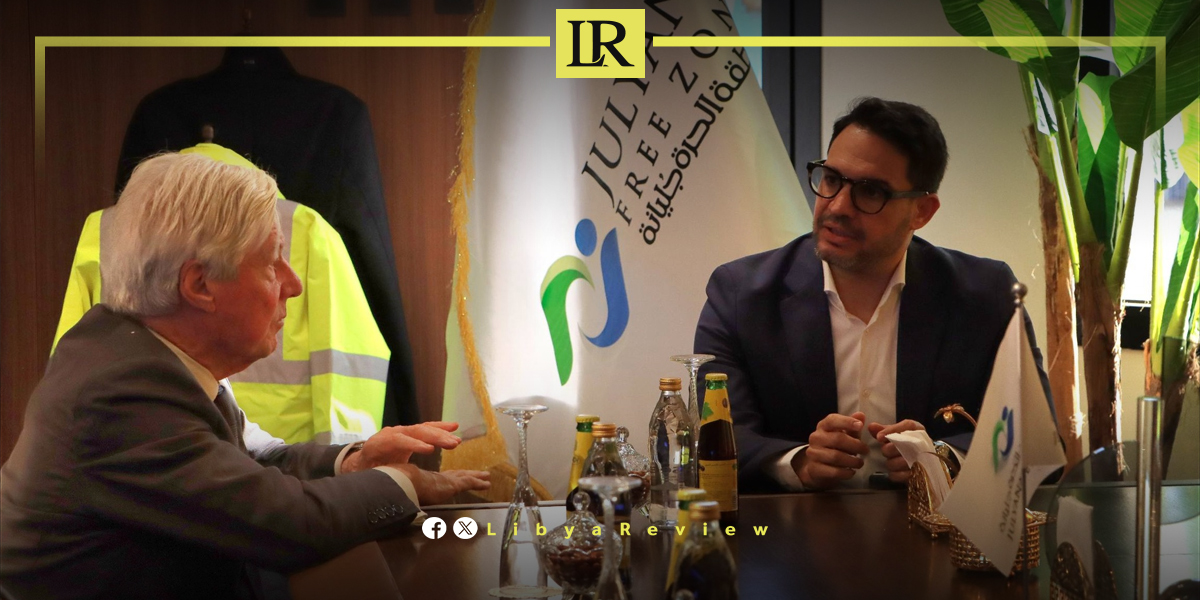
A high-level British delegation conducted an official visit to the Julyana Free Zone in Benghazi, as part of efforts to explore investment prospects and expand economic cooperation between Libya and the United Kingdom.
The delegation was received by Ahmed Al-Omami, Director General of the Julyana Free Zone, who presented a comprehensive overview of the zone’s development plans, operational capacity, and strategic location. The visit focused on identifying practical avenues for collaboration in logistics, infrastructure, port services, and trade facilitation.
During a formal meeting, Al-Omami outlined the latest upgrades undertaken in the free zone, including modernizing port facilities, improving infrastructure, and enhancing readiness to handle commercial activity.
He stressed that the zone is positioning itself as a key gateway for trade in eastern Libya and a platform for attracting foreign direct investment.
A short documentary presentation highlighted the free zone’s logistical capabilities, storage areas, customs services, and long-term expansion strategy. The British delegation expressed interest in the zone’s potential to serve as a hub connecting Libyan markets with regional and international partners.
The visit concluded with a field tour of the port and operational facilities, allowing the delegation to observe ongoing activities and assess investment opportunities on the ground. Discussions emphasized the importance of strengthening private-sector engagement and creating a stable environment that encourages international partnerships.
The British delegation included prominent figures such as the head of the Libyan British Development Association, a former Member of Parliament, a former Minister of State for Foreign Affairs, a strategic communications expert, the head of the Middle East Association in the United Kingdom, a government affairs adviser, and a businessman specializing in UK–Africa relations.
Officials described the visit as a constructive step toward reinforcing economic dialogue and opening new channels of cooperation. As Libya seeks to revitalize its infrastructure and diversify its economy, partnerships with international stakeholders remain central to its development strategy.

