
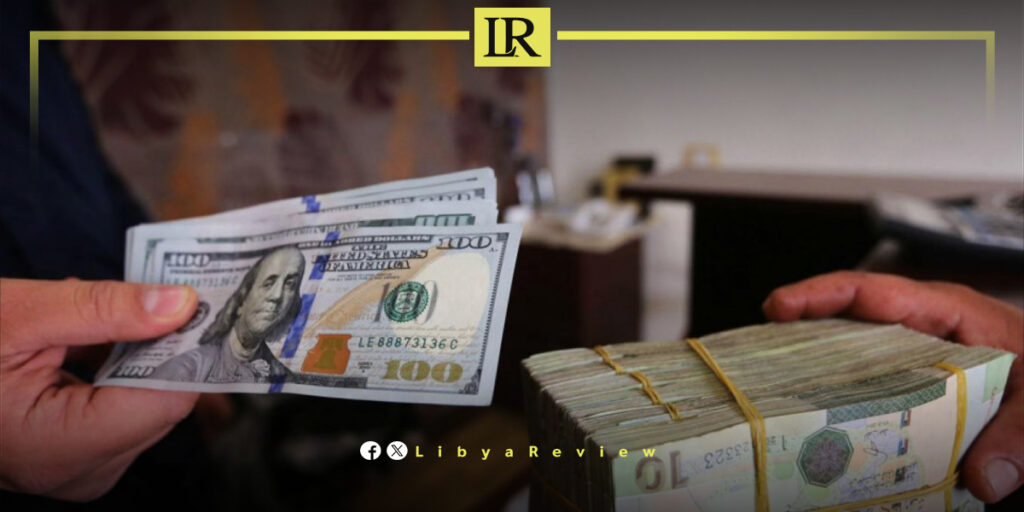
The Central Bank of Libya is accelerating efforts to stabilise the country’s cash market through an expansionary plan to print local currency, alongside measures aimed at curbing speculation and narrowing the gap between official and parallel exchange rates.
The bank announced the signing of a new contract to print 30 billion Libyan dinars in 20-dinar notes. This comes in addition to earlier contracts estimated at around 60 billion dinars currently in supply, bringing the total expected cash issuance this year to approximately 70 billion dinars. Authorities are also considering introducing a new 50-dinar denomination.
The move forms part of broader efforts to address Libya’s long-standing liquidity crisis. The central bank said it had successfully withdrawn significant quantities of counterfeit currency that had placed pressure on the exchange rate. It added that the next phase would include a shift in how foreign currency transactions are conducted.
Officials expect the exchange rate for the US dollar through bank transfers and cheques to fall below cash market rates. The policy aims to encourage reliance on formal banking channels and reduce activity in the parallel market.
Recent developments have already shown an impact. The US dollar has declined in the parallel market to around 9.70 dinars, after reaching higher levels in recent weeks. The euro has also fallen, trading at approximately 11.31 dinars.
In a related step, the central bank has instructed exchange companies to prepare for the launch of a foreign currency sales system for personal use at the start of April, with allocations reaching up to one billion US dollars. Transactions will be conducted digitally rather than in cash, reflecting a growing push towards financial digitalisation.
Over recent weeks, Libya has intensified reforms in its financial sector, including efforts to unify monetary policy across rival institutions, increase dollar supply to the market and tighten oversight of exchange firms.
These measures are aimed at achieving sustainable monetary stability.

