
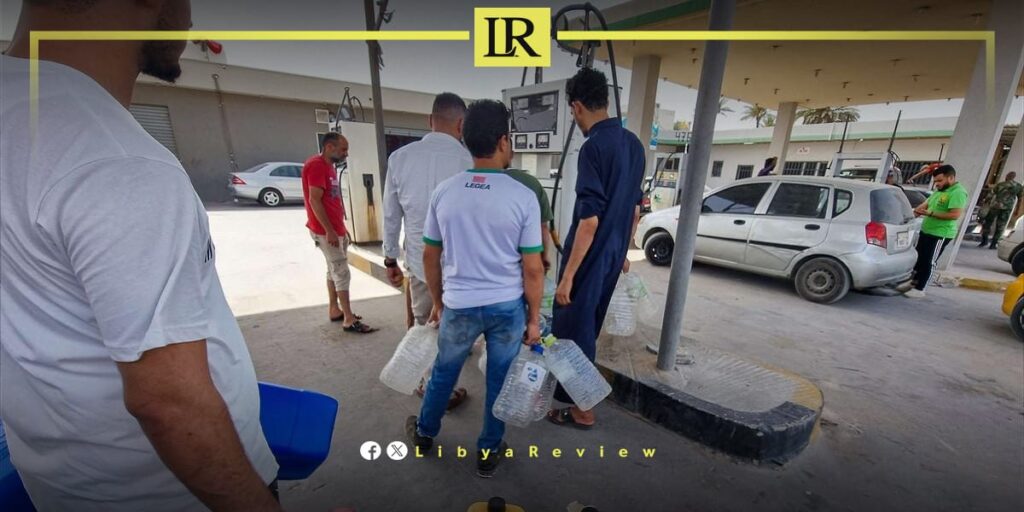
Long queues have once again formed outside petrol stations in several Libyan cities despite repeated assurances from authorities that fuel supplies remain stable and sufficient across the country.
The congestion was reported in multiple areas of western Libya, where motorists were seen waiting for hours outside fuel stations amid growing frustration over recurring shortages and delays in obtaining petrol.
Videos and photographs widely circulated on social media showed extensive traffic congestion around petrol stations, prompting renewed public criticism and questions about the fate of imported fuel shipments in one of Africa’s largest oil-producing countries.
One resident questioned how Libya could continue facing fuel distribution problems despite spending billions of dollars annually on fuel imports.
“The Central Bank opens letters of credit, the National Oil Corporation announces the arrival of shipments, yet citizens continue to face the same queues every time. Where do these quantities go?” he said.
Brega Petroleum Marketing Company denied there was any fuel shortage, stressing that supply operations were proceeding normally and that shipments were arriving regularly at fuel depots and stations across the country.
The company added that strategic fuel reserves remain available and insisted there is no national fuel crisis.
However, the official reassurances failed to calm public anger, with many Libyans arguing that the repeated scenes of congestion point to deeper problems linked to fuel distribution mechanisms, weak oversight and ongoing smuggling activities.
Libya has faced recurring fuel distribution crises for years despite possessing the largest proven oil reserves in Africa.
Local and international reports have repeatedly accused organised smuggling networks of exploiting Libya’s heavily subsidised fuel prices by transporting large quantities of petrol outside the country for profit.
The issue has remained a major source of economic and political tension, with critics warning that continued fuel smuggling undermines state finances and disrupts local markets.

