
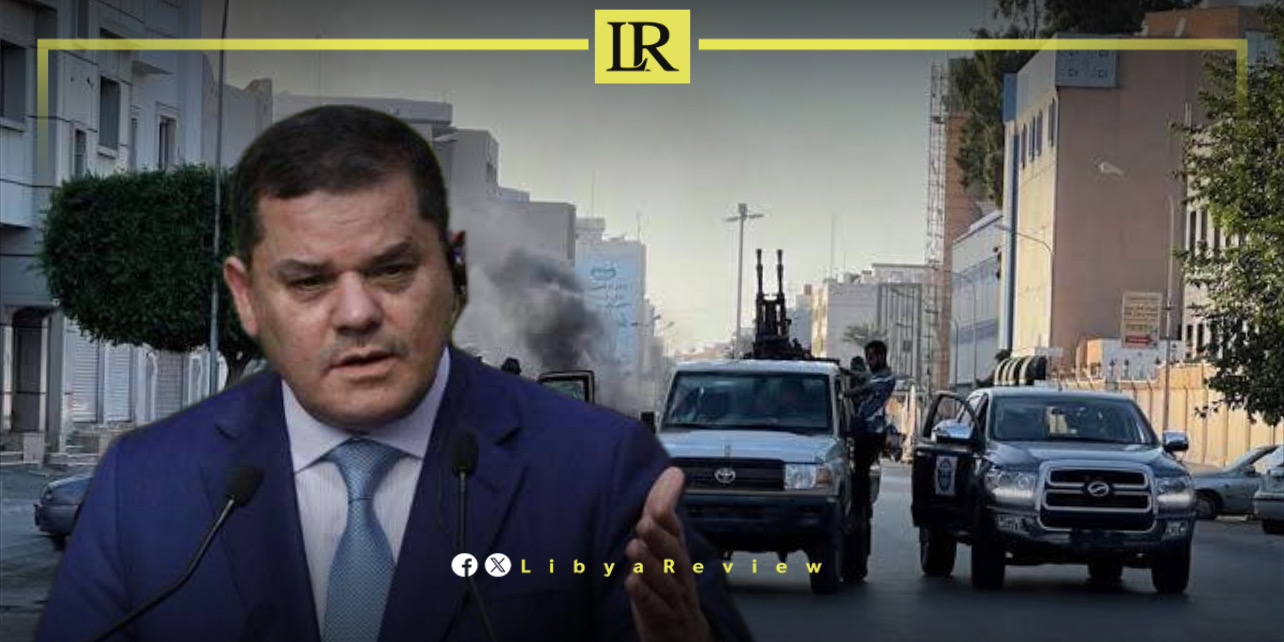
Statements by Libya’s interim Prime Minister Abdel-Hamid Dbaiba claiming that his government has successfully built an organized army and fully integrated armed groups stand in contrast to ongoing instability across western Libya.
In a recent interview, Dbaiba argued that his administration managed to absorb fighters into a structured military framework and expressed optimism about forming a unified national army with support from regional actors, including Turkey and Egypt. However, developments on the ground suggest that fragmentation within the security sector remains deeply entrenched.
West Libya continues to witness recurring armed clashes, particularly in Tripoli and Al Zawiya, where rival factions compete for influence and control. In early 2026, violent confrontations in Al Zawiya resulted in casualties and highlighted persistent divisions among armed groups operating under loose or overlapping command structures.
Similar tensions have been recorded in Tripoli, where clashes in key districts have periodically disrupted daily life and exposed the fragile nature of security arrangements.
These incidents reflect a broader pattern that has defined Libya’s post-2011 security landscape: the coexistence of formal state institutions alongside powerful armed groups that retain significant autonomy.
While some factions have been nominally incorporated into official structures, their loyalty often remains tied to local leadership, financial networks, or political alliances rather than a unified national command.
Analysts argue that the government’s integration strategy has produced a hybrid security system rather than a cohesive military institution.
In many cases, armed groups have been rebranded as state-affiliated units without undergoing meaningful restructuring or disarmament. This approach has allowed authorities to maintain short-term stability in certain areas, but it has not resolved underlying rivalries or eliminated the risk of renewed conflict.
The persistence of clashes in west Libya underscores the limitations of current policies. Armed confrontations between groups nominally aligned with the same government illustrate the absence of centralized control and the fragility of institutional discipline. This reality challenges official claims that all fighters have been successfully integrated into a unified structure.
Dbaiba’s remarks also come amid broader political and security challenges, including disputes over leadership, economic pressures, and migration flows. While external support may play a role in future security arrangements, observers stress that sustainable stability will depend on genuine institutional reform, clear chains of command, and the dismantling of parallel armed structures.

