
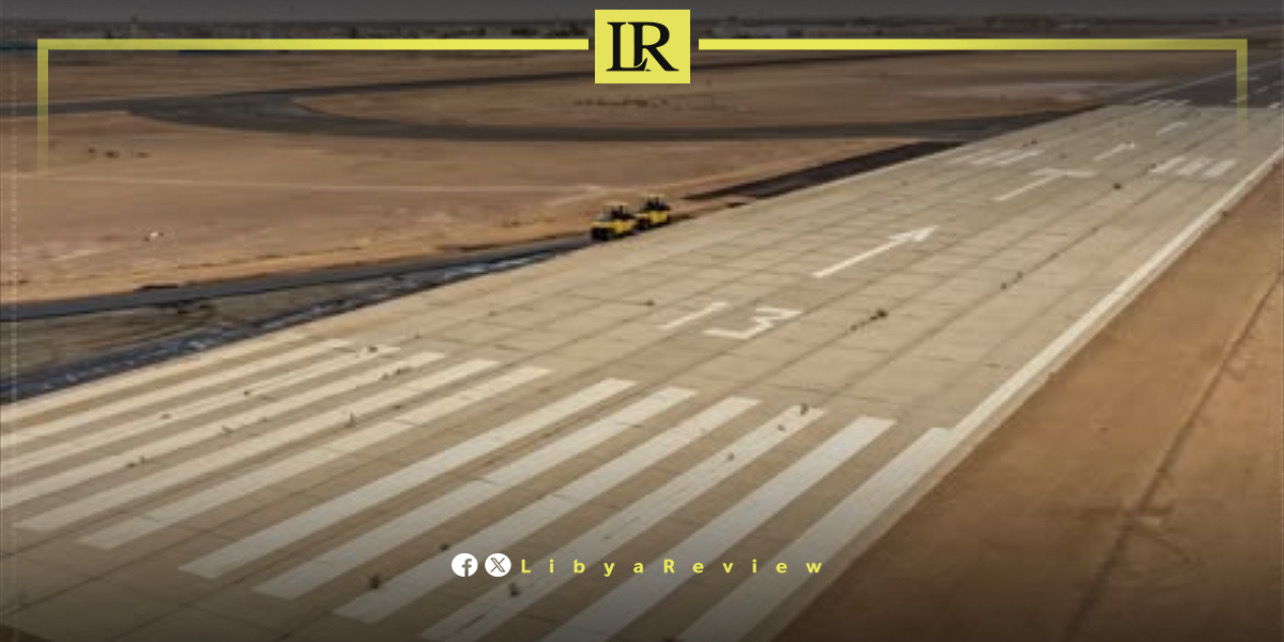
Libya is moving forward with a major upgrade of Sebha International Airport, as comprehensive maintenance works continue to restore full operational capacity and improve safety standards.
The project, overseen by the National Development Authority, focuses on upgrading critical infrastructure at one of southern Libya’s most important aviation hubs. The ongoing work includes repairing damaged sections of the runway, resurfacing and repainting it, and improving its technical performance to ensure safer aircraft operations.
Officials confirmed that maintenance teams are working continuously to complete the project within the planned schedule. The accelerated pace reflects the importance of the airport in serving the southern region and maintaining air connectivity across the country.
The rehabilitation effort comes alongside preparations to open a new passenger terminal in the coming weeks. This new facility is expected to enhance the airport’s capacity, improve passenger services, and support growing travel demand in southern Libya.
Despite the temporary suspension of operations, authorities have confirmed that pilgrimage flights from the southern region will proceed as scheduled. This indicates continued coordination and highlights the airport’s critical role in supporting essential travel needs.
Airport management had earlier announced a temporary closure lasting 15 days to allow for full runway maintenance. Officials emphasized that the decision was necessary to meet safety requirements and ensure long-term operational reliability.
Travelers have been advised to plan accordingly during the closure period, with assurances that updates regarding the reopening will be communicated through official channels once the work is completed.
The upgrade of Sebha International Airport is part of broader efforts to modernize Libya’s infrastructure and strengthen transportation networks, particularly in remote regions. Improving airport facilities in the south is seen as essential for boosting economic activity, enhancing regional connectivity, and supporting long-term development.

