
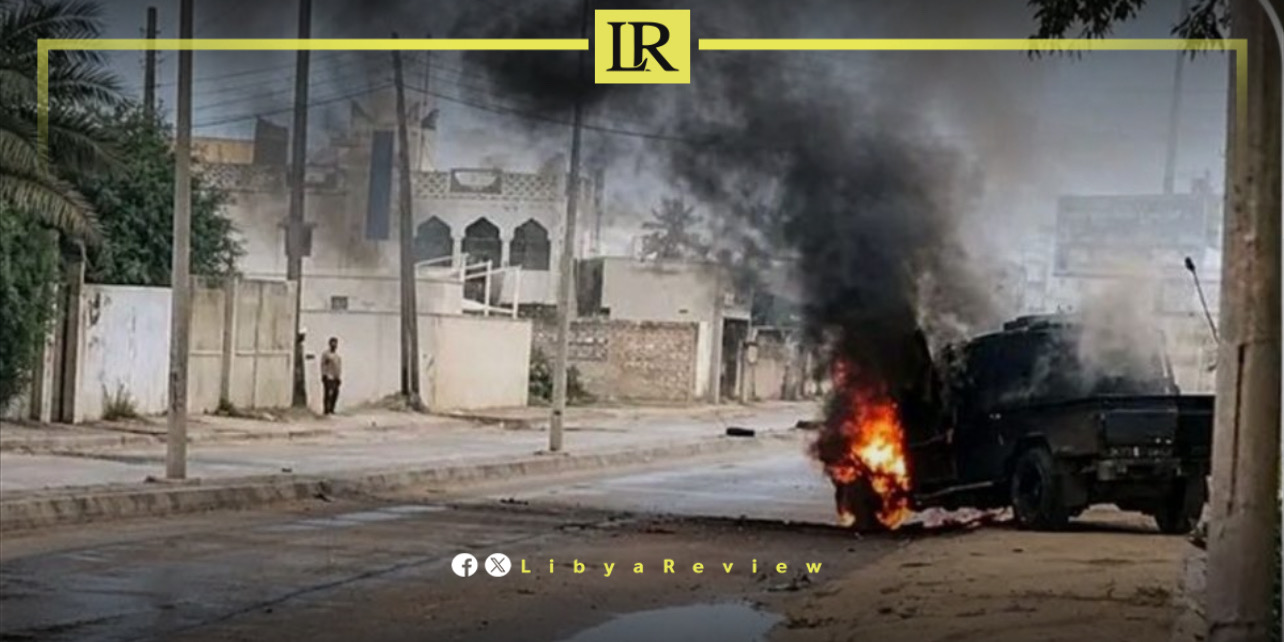
Libya’s Emergency Medicine and Support Centre has announced that its teams carried out 36 evacuation operations for families trapped in areas affected by armed clashes in Al-Zawiya on Friday.
The centre said it received more than 200 distress calls as fighting spread through parts of the city, forcing emergency crews to operate in dangerous conditions. Despite the risk, ambulance teams managed to open safe routes and move civilians from areas close to the confrontations to safer locations.
The centre also said medical teams provided treatment to several injured people. However, it did not release an exact death or injury toll from the violence.
The clashes caused major disruption around Al-Zawiya oil facilities, with reports of direct damage to installations belonging to Al-Zawiya Oil Refining Company. The refinery was forced to stop operations after some of its facilities were hit, including an aviation kerosene tank that was struck by two shells.
On Saturday morning, Brega Oil Marketing Company announced the resumption of operational activity at Al-Zawiya oil depot, in an effort to restore stability to one of Libya’s vital energy sites.
The violence erupted after Al-Zawiya Security Directorate announced the launch of a broad security operation targeting criminal hideouts and wanted individuals. The operation quickly led to armed confrontations, damaging several buildings and vehicles belonging to the Al-Zawiya Oil Refining Company.
Residents expressed concern as the fighting moved close to residential neighbourhoods and strategic oil infrastructure. The incident has once again drawn attention to the fragile security situation in Al-Zawiya, a city west of Tripoli that has repeatedly witnessed armed tensions between rival groups.
The latest escalation also highlighted the vital role of emergency teams in protecting civilians during active clashes. Their intervention helped rescue families trapped inside conflict zones and reduced the risk of further civilian casualties.
The situation in Al-Zawiya remains a major concern because of the city’s strategic importance to Libya’s oil sector and its proximity to key fuel storage and refining facilities.

