
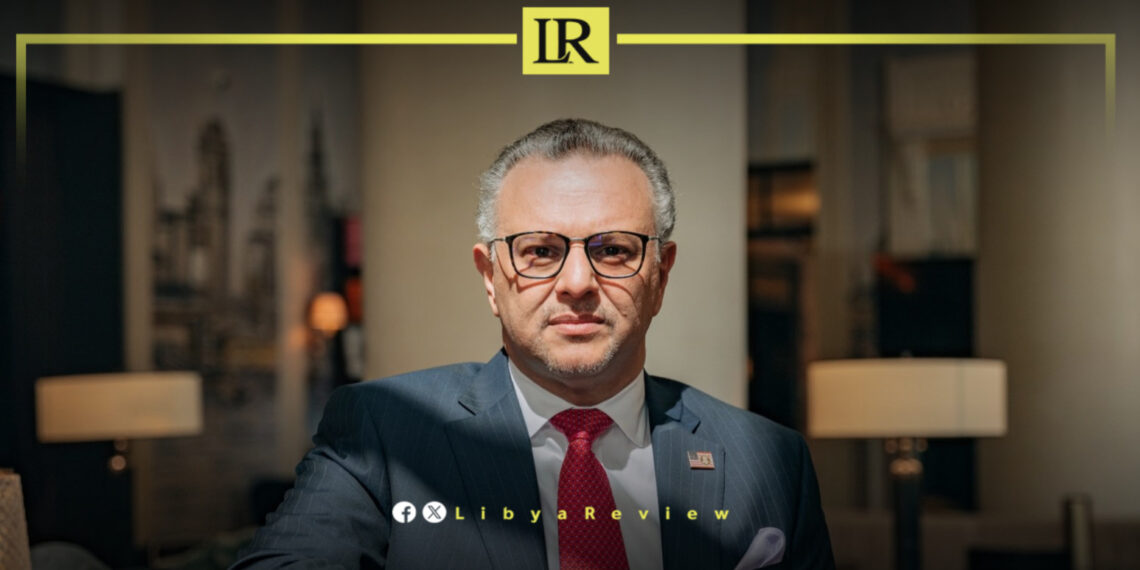
Massad Boulos, adviser to the US president on Arab affairs, has said Libya could hold long-delayed national elections before the end of this year or in early 2027, in remarks that signal growing international momentum behind a political breakthrough in the divided North African country.
In special statements, Boulos outlined what appears to be an emerging roadmap backed by Washington, combining political, financial and security arrangements aimed at ending years of institutional fragmentation and preparing the ground for nationwide elections.
The comments suggest a shift in the US assessment of Libya’s political deadlock, reflecting what analysts describe as intensified diplomatic engagement with key actors in both eastern and western Libya. According to informed sources, the proposed timeline may form part of a broader understanding that includes guarantees linked to the unification of Libya’s military establishment in exchange for commitments to proceed with elections without further delays.
Boulos said the atmosphere among Libya’s rival factions had become increasingly positive, adding that there were “good plans” to move the political process forward. His remarks indicate a transition from conflict management toward a more direct push for constitutional and electoral implementation.
Financial Stability at the Core of the Political Process
The US adviser also highlighted progress toward unifying Libya’s key sovereign institutions, including the Central Bank of Libya and the National Oil Corporation, alongside efforts to establish a unified national budget.
In Libya’s political landscape, control over financial resources has long been a central factor in sustaining rival power structures. Analysts view the consolidation of financial institutions as a major step toward reducing parallel funding channels and strengthening state authority over oil revenues.
The move is expected to support broader economic stability while limiting the ability of competing factions to finance rival mobilisation efforts. International observers say the strategy reflects a governance-focused approach aimed at linking political reconciliation with economic reform and institutional transparency.
Military Unification Remains the Toughest Challenge
Despite cautious optimism, the unification of Libya’s military institutions remains one of the most difficult issues facing any political settlement.
For years, armed forces aligned with eastern and western authorities have operated separately, with ongoing security tensions reported in several areas. However, Boulos expressed optimism regarding the security track, raising speculation that preliminary understandings may already exist over the creation of joint security mechanisms to secure the electoral process.
Observers believe such arrangements could involve temporary coordination structures or joint operations rooms under international supervision before any full military integration takes place.
Washington Expands Its Role Alongside the UN Mission
Boulos stressed that the United States continues to work closely with the United Nations Support Mission in Libya and supports the comprehensive political roadmap led by the UN mission.
However, analysts note that Washington now appears to be taking a more direct role in shaping the settlement process, while the UN framework provides international legitimacy and diplomatic cover.
The parallel US-UN engagement reflects a broader international effort to stabilise Libya amid renewed geopolitical competition in the Mediterranean and North Africa. Yet some experts warn that differences in priorities or timelines between international actors could create tensions if coordination weakens.
For now, Boulos’s remarks offer one of the clearest indications yet that international powers are attempting to transform Libya’s stalled political transition into a realistic electoral project supported by coordinated financial, security and diplomatic arrangements.

