
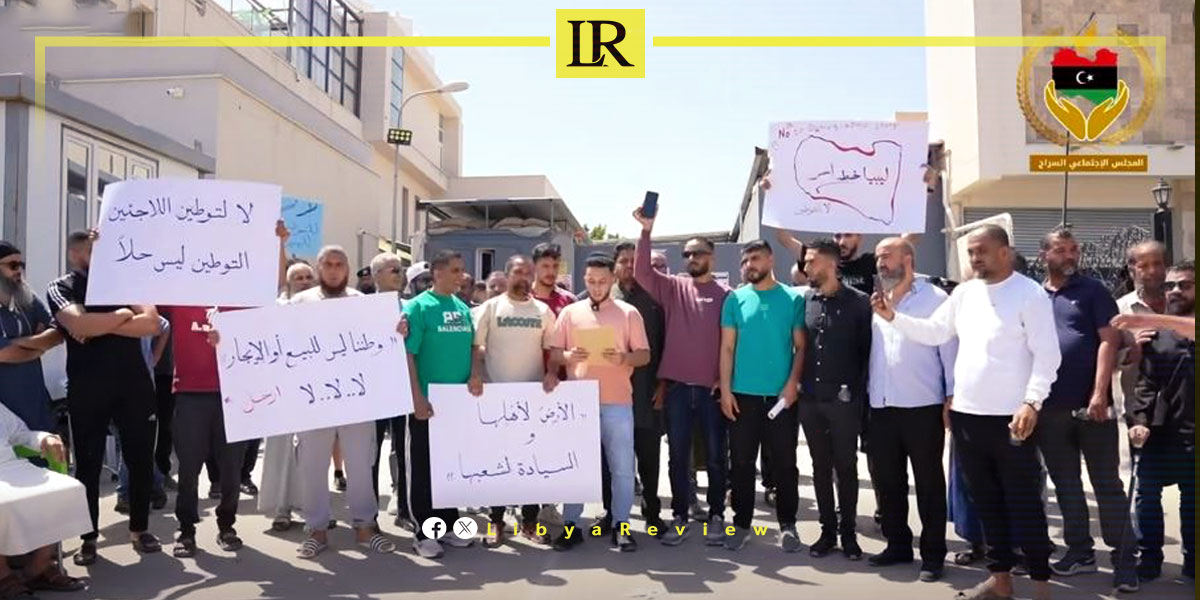
Residents of the Al-Sarraj district in Tripoli staged a protest calling for the relocation of the local office of the United Nations High Commissioner for Refugees, citing growing concerns over the increasing presence of irregular migrants in residential neighborhoods and the impact on local security and daily life.
The demonstration took place outside the organization’s headquarters, where residents expressed frustration over what they described as a sharp and unregulated rise in migrant activity inside densely populated areas. Protesters argued that the situation has placed growing pressure on the community and contributed to rising fears among local families and property owners.
Participants claimed that the district has witnessed increasing incidents of theft, intimidation, and public disorder, warning that the current situation threatens the stability of the area. Demonstrators carried banners rejecting the settlement of irregular migrants within residential neighborhoods and called for urgent measures to address the issue.
Residents demanded the immediate suspension of all migration-related activities conducted within the district, including interviews and direct interaction with migrants. They insisted that such operations should be relocated outside residential areas to reduce pressure on local infrastructure and improve public safety.
The protesters also called on Libyan authorities to assume greater responsibility for maintaining security and responding to the concerns of residents. They warned that public frustration could escalate further if officials fail to take action or continue ignoring the demands raised by the community.
The protest was organized by the Al-Sarraj Social Council, which had previously announced plans for the demonstration and called for the transfer of the organization’s operations away from residential zones.
According to council representatives, meetings had been held with municipal officials, local security authorities, and police representatives to discuss the security situation and coordinate the protest.

