
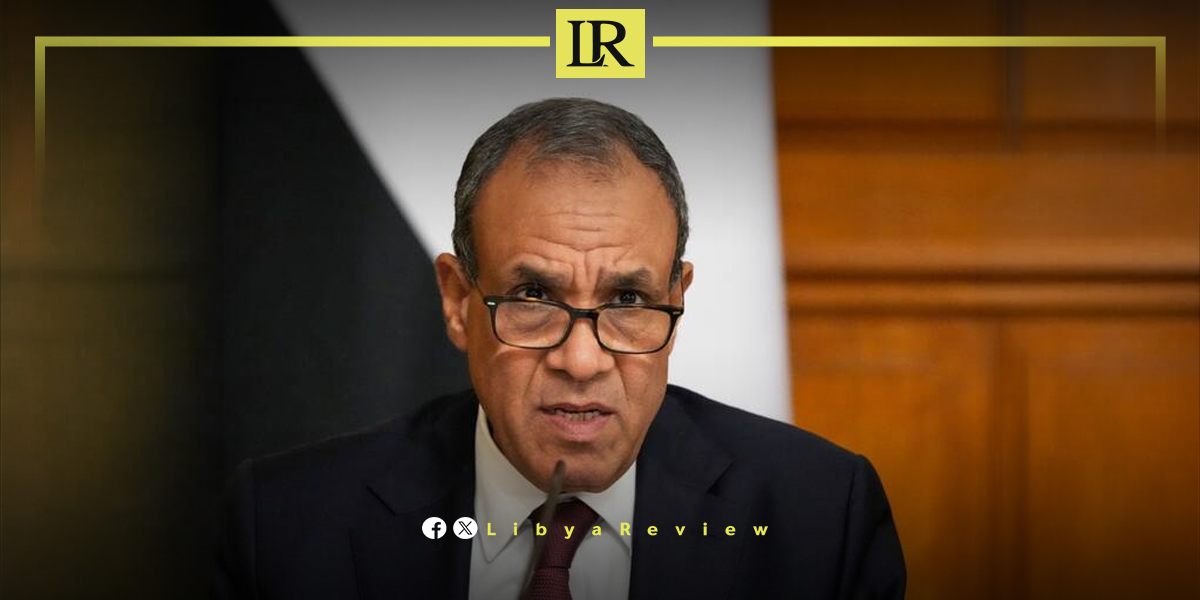
Egyptian Foreign Minister Badr Abdelatty held a telephone conversation with Massad Boulos to discuss developments in Libya, Sudan, and broader regional security issues, according to Egypt’s Ministry of Foreign Affairs.
The talks focused on ongoing efforts to address political and security challenges across the region, with both sides reviewing the latest developments in Sudan and Libya, two countries facing complex political transitions and security concerns.
During the discussion, Abdelatty reaffirmed Egypt’s support for Sudan’s unity, sovereignty, and territorial integrity. He stressed the importance of preserving Sudanese state institutions and rejected any attempts to establish parallel governing bodies that could further deepen divisions within the country.
The Egyptian foreign minister also called for a Sudanese-led political process aimed at ending the conflict and restoring stability. He highlighted the need for an urgent humanitarian truce as a first step toward achieving a lasting ceasefire, facilitating humanitarian assistance, and reducing civilian suffering caused by the ongoing crisis.
Libya was another key topic on the agenda. Abdelatty reiterated Egypt’s longstanding support for Libya’s stability, sovereignty, and territorial unity. He emphasized the importance of unifying Libya’s state institutions and advancing a comprehensive political process led by Libyans themselves.
According to Abdelatty, a broad national political settlement should create the conditions necessary for holding simultaneous presidential and parliamentary elections at the earliest possible opportunity. He stressed that elections remain a critical component of efforts to restore political legitimacy and strengthen national institutions.
The discussion also addressed regional security challenges and the importance of continued coordination between Egypt and the United States on issues affecting North Africa and the wider Middle East.
Abdelatty further raised the issue of water security, which Egypt considers a strategic and existential priority. He underscored the importance of adhering to international law and avoiding unilateral measures concerning shared water resources, reiterating Egypt’s position that cooperation and dialogue remain essential for resolving disputes over transboundary water systems.
The conversation reflects ongoing diplomatic engagement between Cairo and Washington on major regional files, including Libya, Sudan, security cooperation, and conflict resolution efforts. Both countries continue to support initiatives aimed at promoting stability, preserving state institutions, and encouraging political solutions to regional crises.
The talks come amid renewed international efforts to advance peace initiatives in Libya and Sudan, while addressing broader security and humanitarian challenges affecting the region.

