
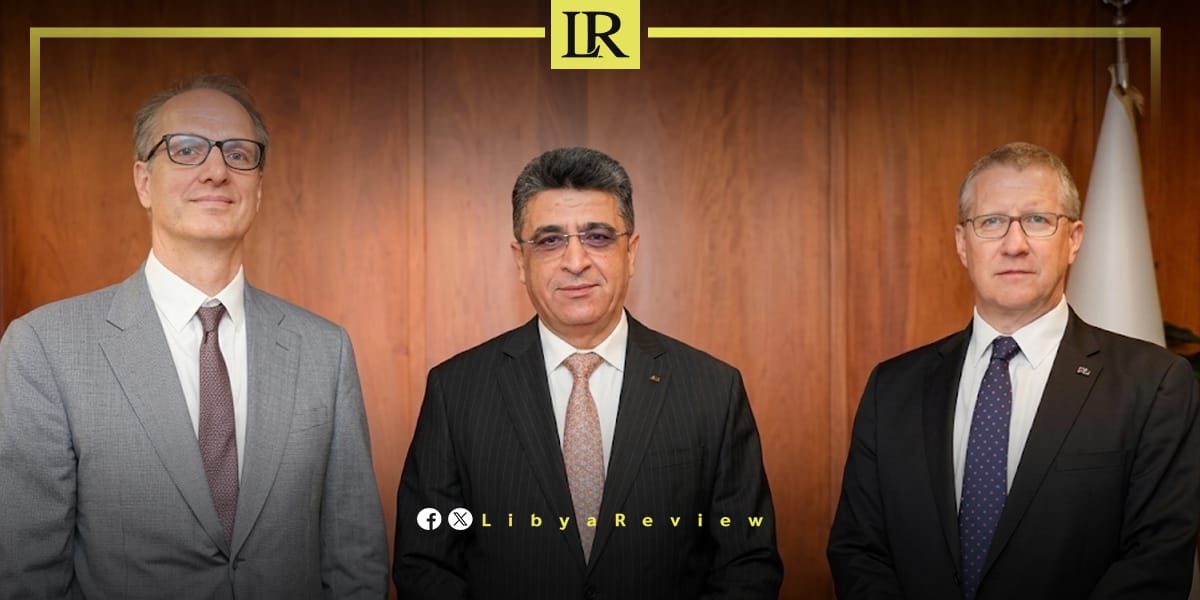

The head of Libya’s Audit Bureau, Khaled Shakshak, held talks with British Ambassador to Libya Martin Reynolds on strengthening cooperation and discussing several issues of mutual interest, the bureau said in a statement.
The meeting focused on technical cooperation programmes and mechanisms to support institutional capacity building, as both sides reviewed initiatives aimed at promoting governance principles, enhancing integrity and transparency, and developing oversight mechanisms within Libya’s public institutions.
According to the statement, the discussions also covered ways to improve the efficiency of Libya’s supervisory bodies through the exchange of expertise and cooperation with international partners.
Shakshak and Reynolds stressed the importance of continuing collaboration and sharing experiences in areas related to accountability, transparency and institutional reform.
The Audit Bureau said the meeting forms part of its broader strategy to expand cooperation with international partners and strengthen its institutional capabilities. The bureau added that such partnerships are intended to support efforts to modernise Libya’s oversight system and implement internationally recognised standards of integrity and transparency.
The United Kingdom has been involved in a number of initiatives aimed at supporting governance and institution-building efforts in Libya, including programmes designed to enhance public sector accountability and improve administrative performance.
Libya’s Audit Bureau plays a key role in monitoring public spending and overseeing the management of state resources. In recent years, the institution has repeatedly called for stronger governance frameworks and greater transparency to improve public sector performance and increase confidence in state institutions.
The latest meeting reflects ongoing cooperation between Libya and the United Kingdom as both sides seek to deepen engagement in areas related to governance, institutional development and administrative reform, amid broader efforts to strengthen state institutions and support long-term stability in the country.