
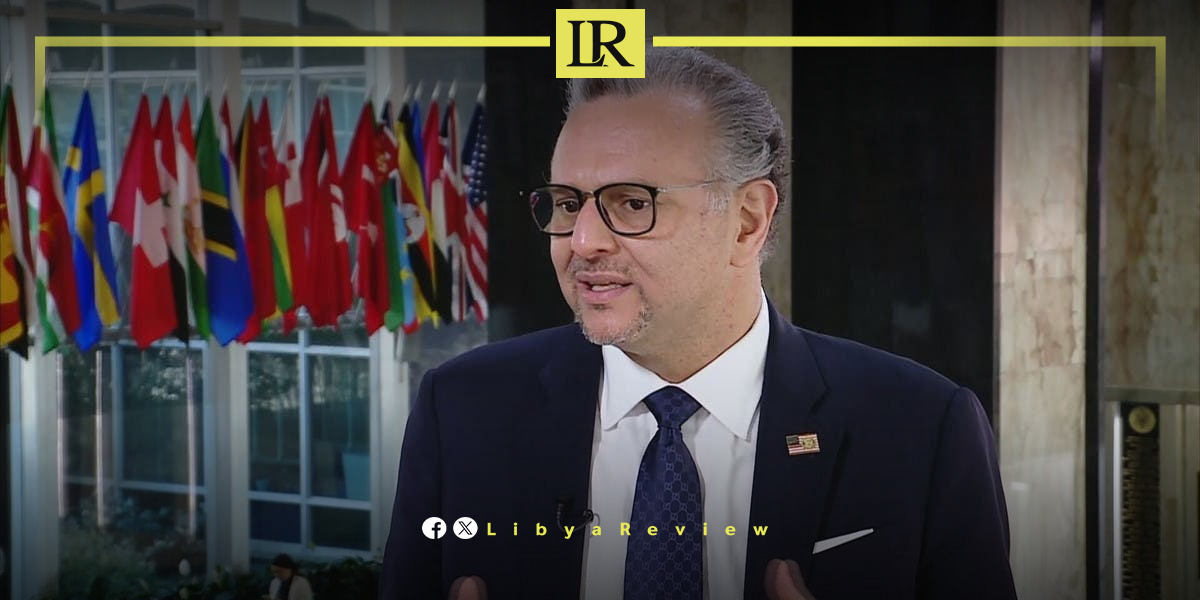
US Presidential Adviser Massad Boulos has announced that Washington is prepared to host the signing of a proposed US-backed political initiative for Libya if Libyan parties reach a final agreement, adding that the ceremony would take place in the presence of US President Donald Trump.
Speaking to the media, Boulos said the initiative has been under development for more than 18 months and is designed to end Libya’s political divisions and reunify its state institutions.
He described the proposal as “American in sponsorship but Libyan in substance,” stressing that its success ultimately depends on consensus among Libyan stakeholders.
A central component of the initiative is the creation of a joint security operations room bringing together military representatives from eastern and western Libya.
According to Boulos, the mechanism would operate with support from the U.S. Africa Command (AFRICOM) and several partner countries, serving as a practical step toward the long-term unification of Libya’s military establishment.
Boulos emphasized that decisions on the future prime minister and the composition of the Presidential Council remain exclusively for Libyans to determine. He said the initiative is intended to complement the United Nations political roadmap rather than replace it, describing both tracks as mutually supportive.
Addressing criticism of the proposal, Boulos said many objections are based on incomplete information because the initiative is still being finalized.
He noted that consultations with Libyan political actors are continuing and that the door remains open to further consensus before the document is completed.
He also added hat communication is taking place daily with political leaders from across Libya.
Boulos reaffirmed Washington’s respect for both the House of Representatives and the High Council of State, saying the two institutions would continue to play an important role throughout the implementation process.
He added that 109 of the 167 members of the House of Representatives have expressed support for the initiative.
Finally, Boulos rejected reports claiming the transition would continue until 2032, saying the proposed roadmap envisions a transitional period of only two to three years, provided that a broad political agreement is reached.

