
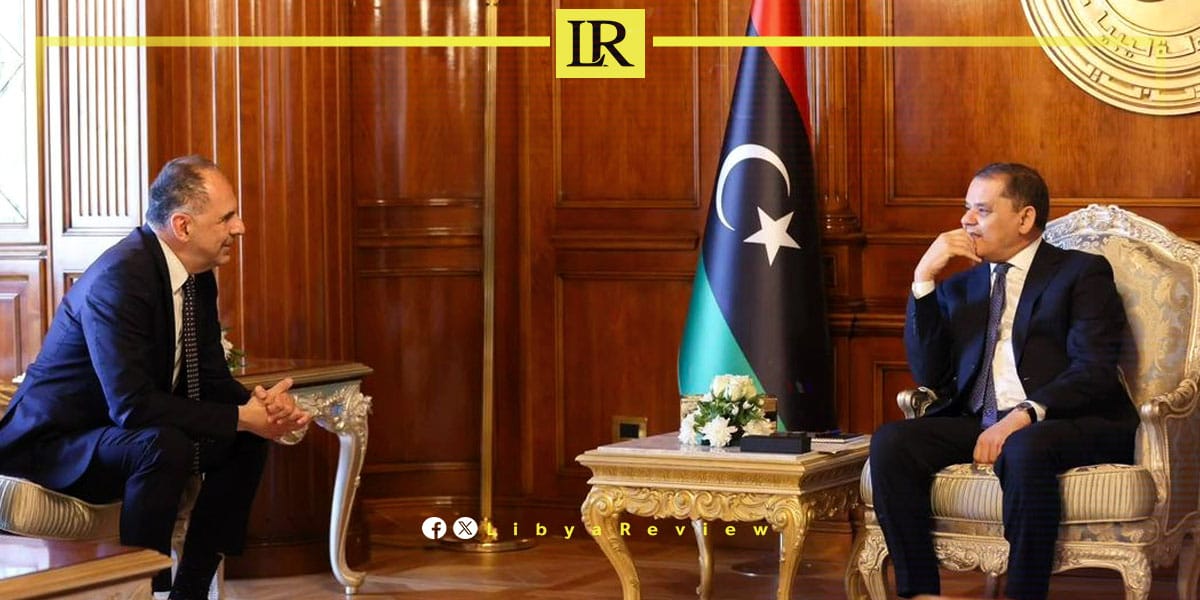
The visit of Greek Foreign Minister Giorgos Gerapetritis to Tripoli has sparked wide debate over its political implications, raising questions about whether Athens is prioritising migration control or engaging with a fragile political and security landscape dominated by armed groups.
The Greek minister held meetings with key officials in the capital, including Abdel-Hamid Dbaiba and Mohamed Al-Mnifi, in talks officially framed as efforts to strengthen bilateral relations. However, critics argue that such engagement risks providing diplomatic legitimacy to authorities operating within a complex network of militias that continue to shape security dynamics in western Libya.
Migration emerged as a central issue during the visit, with both sides emphasising the need for closer cooperation to curb irregular flows across the Mediterranean. Yet, on the ground, Libya remains a primary transit hub, where smuggling networks and armed groups are widely seen as benefiting from ongoing migration routes. This has led to concerns that European approaches remain largely security-focused, without addressing deeper structural drivers of migration.
Maritime border demarcation also featured prominently in discussions, as technical committees explored potential coordination between Greece and Libyan authorities. For Athens, securing its interests in the Eastern Mediterranean appears to be a key priority. Observers note that pursuing such agreements with Tripoli could reflect a pragmatic strategy, but one that carries political risks given ongoing questions about governance and security legitimacy in the capital.
Economic cooperation was also discussed, suggesting an effort to link political engagement with trade and investment opportunities. At the same time, the Tripoli-based authorities are seeking to expand international partnerships, using bilateral agreements as a means to strengthen their external standing.
The visit, therefore, goes beyond routine diplomacy. It highlights a broader pattern of international engagement with Libya’s current power structures, raising concerns about whether such moves may reinforce the status quo rather than contribute to long-term stability.

