
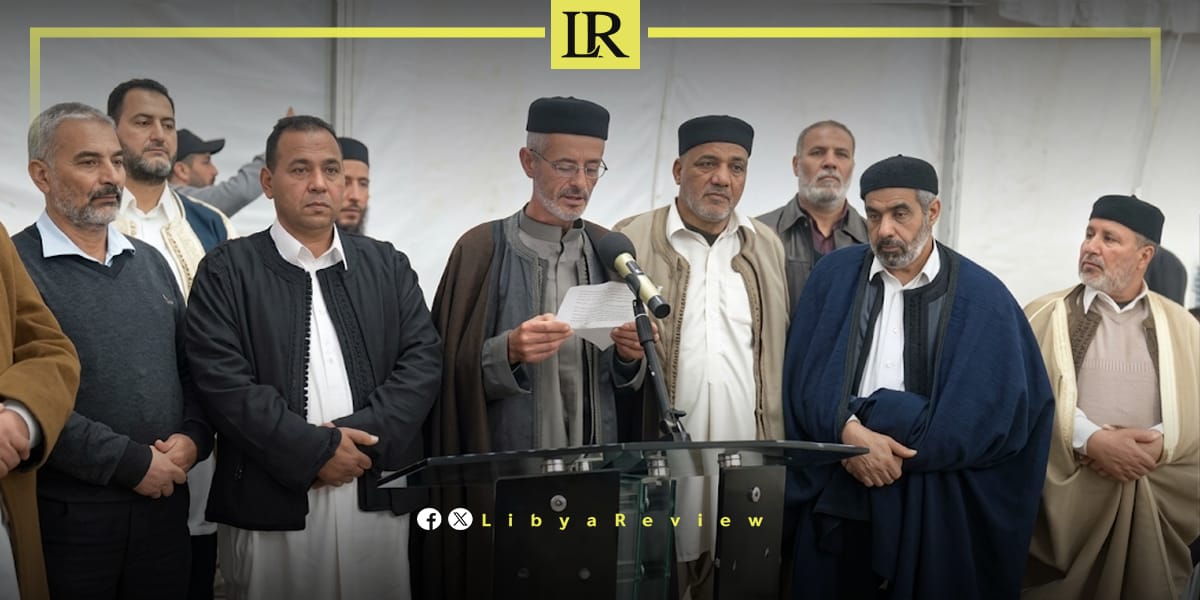
The Council of Elders and Notables of Bani Walid has firmly rejected any attempts to resettle foreign nationals or migrants in Libya, stressing that the country is not a destination for demographic change and that Libyans remain committed to protecting their national identity, sovereignty, and future.
In a statement issued on Thursday, the council described any efforts aimed at settling migrants inside Libya as a direct threat to national sovereignty, social cohesion, and national security. The council warned that such initiatives could undermine the country’s demographic balance and create long-term challenges for Libya’s stability.
The statement comes amid growing public debate over irregular migration and reports circulating on social media regarding alleged plans to accommodate migrants permanently inside Libya. The council said it categorically rejects any projects, agreements, or arrangements that could lead to the settlement of migrants, holding all relevant domestic and international parties responsible for any steps taken in that direction.
The tribal body also urged foreign organisations, international agencies, and diplomatic missions to avoid involvement in programmes that could alter Libya’s demographic reality or impose policies contrary to the interests of the Libyan people.
The council called on executive and legislative authorities, as well as military and security institutions, to strengthen border protection and take decisive measures to safeguard Libya’s sovereignty and territorial integrity.
The statement echoed similar positions recently expressed by the High Council of State, headed by Mohammed Takala, which reaffirmed its opposition to any arrangements that could directly or indirectly lead to migrant resettlement inside Libya. The council stressed that migration management remains a sovereign responsibility of the Libyan state and must respect national laws and security considerations.
The latest statement also follows protests in Tripoli, where demonstrators gathered outside the office of the United Nations High Commissioner for Refugees to express opposition to what they viewed as potential migrant settlement policies. Meanwhile, Libyan authorities have repeatedly stated that they reject any plans to permanently resettle irregular migrants in the country.

