
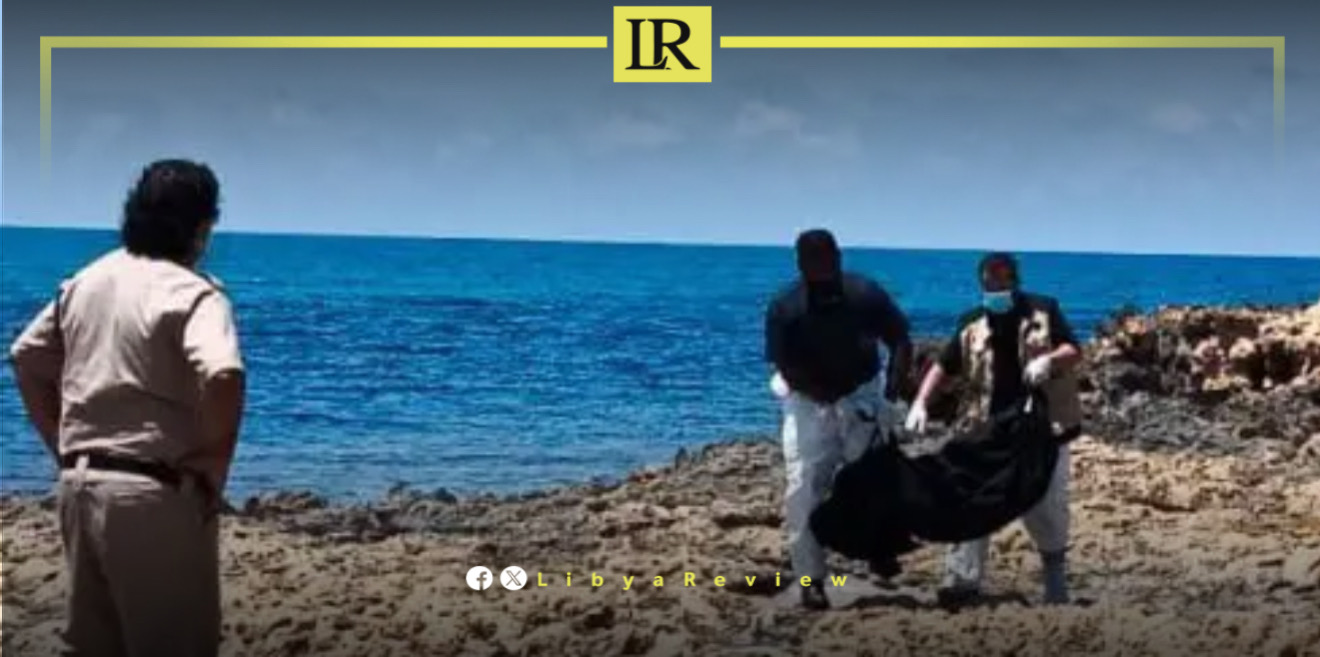
Libyan emergency teams have recovered the body of a migrant after it washed ashore on the coast of Qarabolli, east of Tripoli, in the latest tragedy linked to irregular migration across the Mediterranean.
The Emergency Medicine and Support Center said its teams responded to a report from Qarabolli Police Station and moved to the area in coordination with the relevant authorities. Specialist field teams then began recovery operations along the beach.
According to the centre, the body of a migrant was recovered after being carried to the shore by sea currents. The case was handled in line with the medical and field procedures followed in such incidents, before preparations were made to hand over the body to the competent authorities for the completion of legal procedures.
The incident adds to a series of similar cases in which the bodies of migrants have been found along Libya’s coastline, following dangerous attempts to cross the Mediterranean towards Europe.
Libya remains one of the main departure and transit points for migrants seeking to reach European shores. Many of these journeys are organised through unsafe smuggling networks, with migrants often placed on overcrowded and poorly equipped boats that are unable to withstand harsh sea conditions.
The latest discovery in Qarabolli once again highlights the human cost of irregular migration routes across the Central Mediterranean, where shipwrecks, drownings, and missing persons cases continue to pose serious humanitarian and security challenges.
Local emergency teams, police units, medical workers, and humanitarian actors are frequently required to respond to such incidents, including body recovery operations, survivor assistance, and coordination with judicial and security authorities.
The recovery of the migrant’s body also underlines the continuing pressure faced by Libyan coastal communities, which remain on the front line of a wider migration crisis involving human trafficking networks, unsafe sea crossings, and repeated loss of life.
Humanitarian organisations have repeatedly warned that the absence of safe migration pathways, combined with the risks posed by smugglers and dangerous maritime conditions, continues to expose thousands of migrants to death or disappearance at sea.
The Qarabolli incident is another reminder of the urgent need for stronger rescue coordination, improved protection mechanisms, and broader regional efforts to prevent further loss of life along the Mediterranean migration route.

