
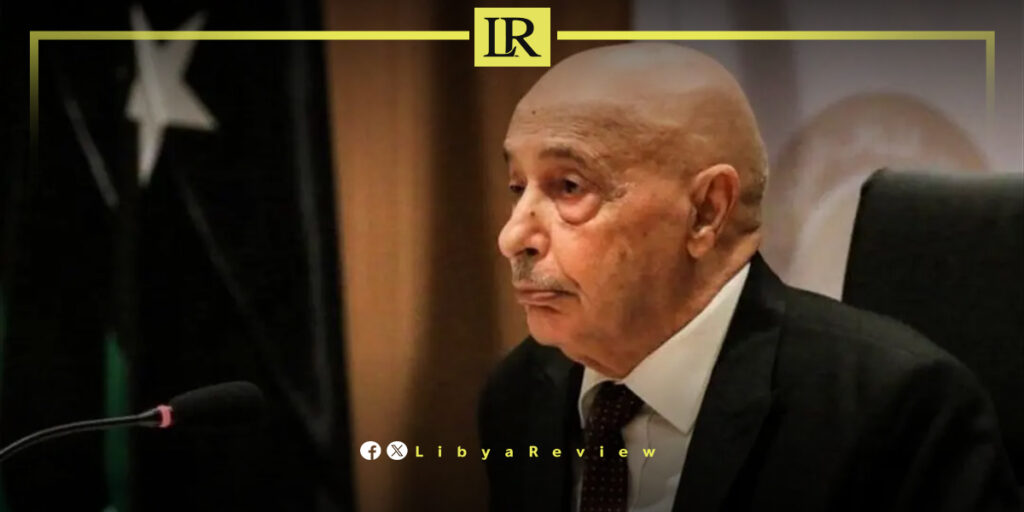
Libyan House of Representatives Speaker Ageela Saleh has called for restraint over proposals to change the country’s top security officials, warning against dragging sovereign institutions into political disputes at a sensitive time for Libya.
In a statement issued on Monday, Saleh said recent discussions regarding the replacement of the heads of key security agencies had been accompanied by political tensions and disagreements that risked undermining national stability.
He stressed that Libya’s sovereign security institutions should remain above political conflicts to ensure they continue performing their duties with professionalism and impartiality.
Saleh argued that raising the issue of leadership changes at this stage could create new crises, deepen divisions and obstruct ongoing efforts aimed at achieving political stability, unifying state institutions and preparing the country for long-delayed elections.
He urged all political actors to act responsibly and avoid pushing for hasty or poorly considered decisions that could affect the country’s security institutions.
The statement came in response to an announcement by the Presidential Council in Tripoli, which said it had unanimously approved decisions discussed during a meeting on Sunday. The council noted that member Moussa Al-Koni was absent because he was outside the country.
However, Al-Koni later denied that an agreement had been reached on appointing a new head of the General Intelligence Service and a new Chief of the General Staff.
In a post on X, Al-Koni said the Presidential Council had met to discuss the positions but had not reached an agreement.
The Presidential Council said its discussions reflected the sensitivity of the current stage and the need for state institutions to operate regularly from their official headquarters in Tripoli, ensuring continuity in performing their constitutional duties and strengthening state authority.
Neither Al-Koni nor the Presidential Council provided further details regarding the proposed appointments or the reasons behind the anticipated changes in the leadership of Libya’s intelligence and military institutions.

