
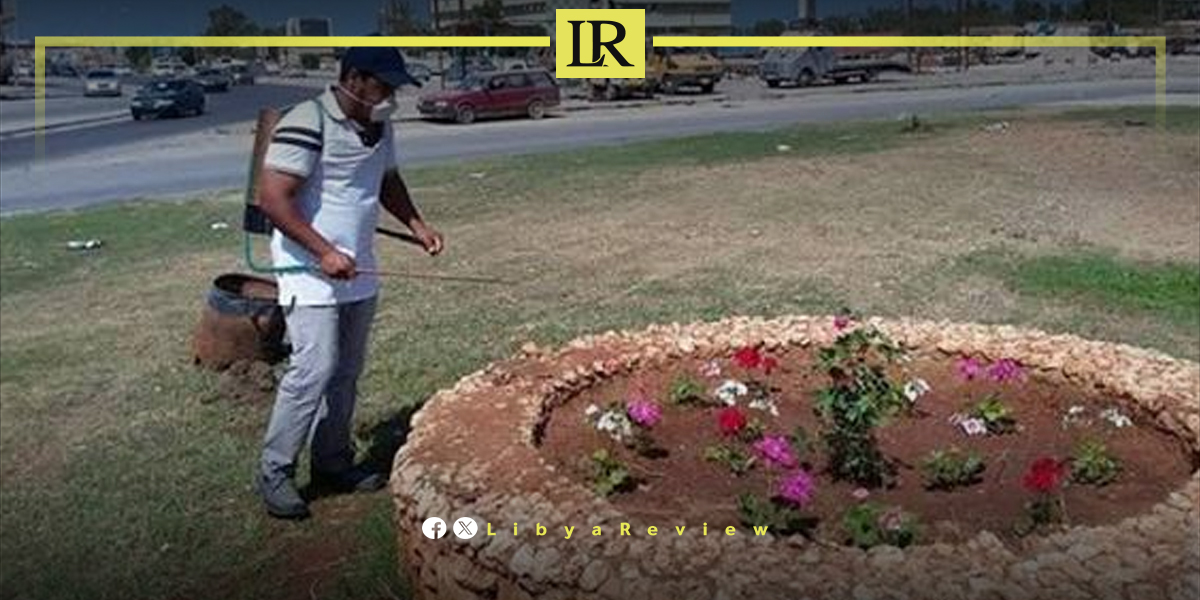
A new civic initiative proposes planting 1.5 million trees across Benghazi over the next decade, with the goal of turning the eastern Libyan city into a greener Mediterranean centre while creating jobs and supporting a new environmental economy.
The proposal was presented by journalist and security and migration researcher Dr Reem Al-Barki under the suggested name “Benghazi: City of Mediterranean Gardens.” It is based on the principle of planting one tree for every resident, using an estimated city population of around 1.5 million.
Under the plan, 500 trees would be planted every day. Allowing for the possible loss of around 150 trees due to weather, damage or insufficient care, the city would gain a net total of approximately 350 trees daily.
That rate would add nearly 128,000 surviving trees each year and around 1.28 million over ten years. Further planting and the replacement of damaged trees could then bring Benghazi closer to the proposed 1.5 million-tree target.
The initiative calls for planting along main roads and around schools, universities, mosques and public facilities. It also proposes green belts around the city to reduce sand encroachment, dust and rising temperatures, while requiring new housing developments to include defined green areas.
Al-Barki’s proposal seeks to move tree planting beyond temporary voluntary campaigns by assigning long-term environmental responsibilities to businesses and financial institutions.
Start-ups would be required to plant 20 trees and care for them for ten years, while foreign companies operating in Benghazi would plant 1,000 trees annually. Oil companies and commercial banks would each be responsible for planting and maintaining at least 500 trees, with larger commitments linked to their capital and operations.
Hotels would plant five trees for every guest room, while shopping centres would plant five trees annually for every retail unit. The requirements would be treated as long-term investment in the city’s health, appearance and commercial appeal rather than as a conventional tax.
The initiative could also establish a wider green economy by increasing demand for local plant nurseries, agricultural engineers, irrigation technicians, water tanks, irrigation systems, transport services and landscaping companies.
It could create opportunities for young entrepreneurs to establish businesses specialising in tree maintenance, environmental technology and public-space management. Research centres could also study which tree species are best suited to Benghazi’s climate and water conditions.
The proposal places tree survival at the centre of the project, arguing that success should be measured by the number of trees still alive after several years rather than the number planted during public campaigns.
Suggested measures include making the planting and year-long care of a tree part of university graduation initiatives and introducing annual awards for individuals and institutions achieving the highest survival and growth rates.
Al-Barki called on the Libya Development and Reconstruction Fund and the National Development Agency to adopt the proposal as a long-term urban and economic programme. The National Development Agency already oversees agricultural and environmentally sustainable projects in several areas of Libya.
The initiative presents tree planting as part of Benghazi’s transition from years of conflict and reconstruction towards a healthier, more attractive and investment-friendly city.

