
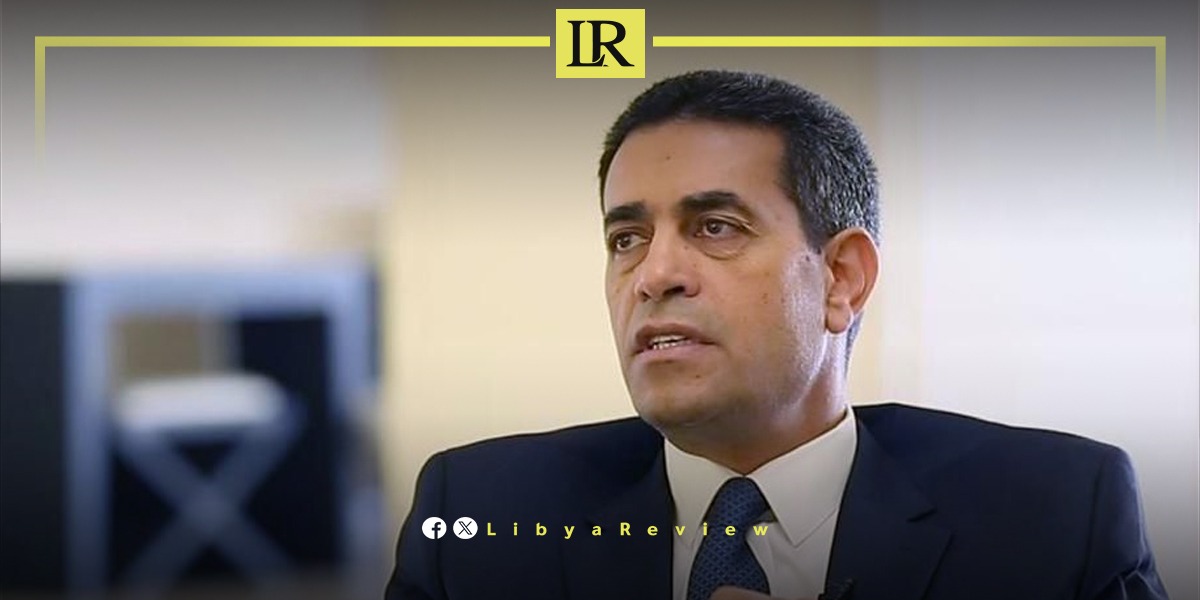
On Saturday, the Chairman of Libya’s High National Election Commission (HNEC), Emad Al-Sayeh, highlighted significant obstacles that make it challenging to conduct elections in Libya soon. Speaking to the Atlantic Council, Al-Sayeh emphasized that the path toward elections and peaceful power transitions faces substantial constraints.
The Libyan official explained that adopting electoral laws has become a far greater challenge than drafting them initially. He noted that over the past 12 years of managing the Libyan crisis, the United Nations Mission in Libya has lacked a strategic vision to transition the country from an interim phase to permanent stability.
“Every UN envoy adopts a different vision for resolving the political crisis,” Al-Sayeh remarked. “These visions are undoubtedly influenced by the personal beliefs and behaviors of the envoys and by the changing political realities on both local and international levels.”
Since the fall of Muammar Gaddafi in 2011, Libya has been embroiled in a complex conflict involving various factions vying for control. The country has struggled to establish a unified government, with power split between the internationally recognized Government of National Unity (GNU) in Tripoli and a rival administration in the east backed by the Libyan National Army (LNA).
Despite numerous efforts by international bodies, including the United Nations, to mediate and propose frameworks for elections, Libya remains in a state of political limbo. The lack of a coherent strategy to move Libya from its transitional phase to a stable, democratic state has been a significant impediment.
Adopting and implementing electoral laws in Libya has proven to be particularly contentious. Political factions and local power brokers often have conflicting interests, making consensus difficult to achieve. The absence of a stable legal framework for elections further complicates the situation, leaving the country in a prolonged state of uncertainty.

