
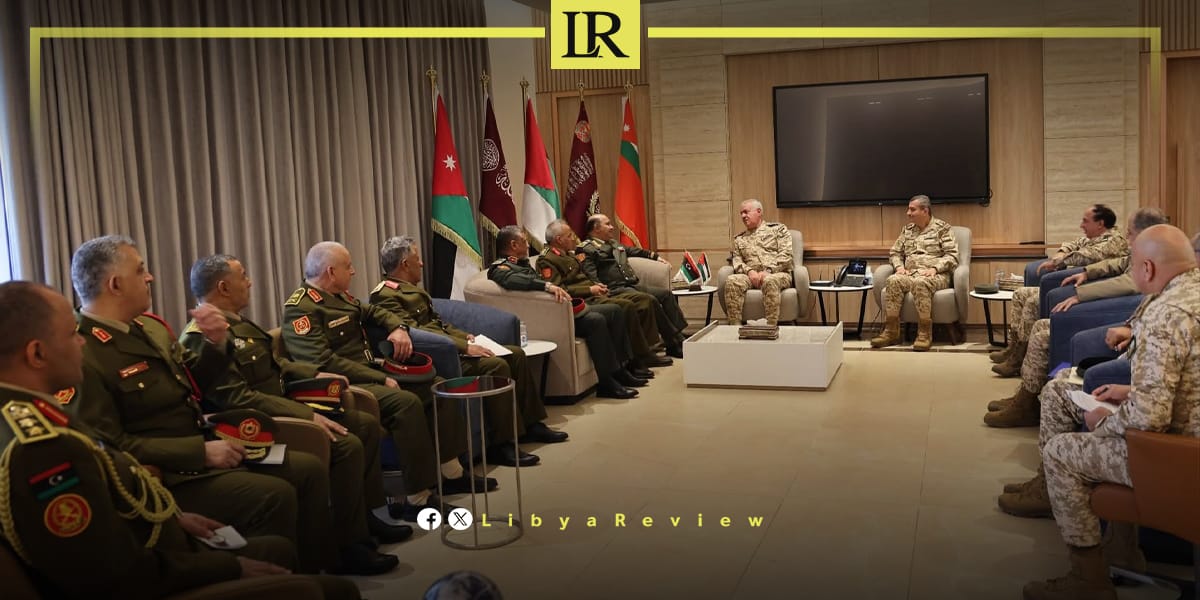
A delegation from Libya’s General Command of the Libyan National Army (LNA) has discussed new plans to train Libyan officers during 2026 while on an official visit to Jordan, as part of ongoing military cooperation between the two countries.
The discussions took place during a meeting in Amman between the Secretary-General and Head of the Libyan-Jordanian Joint Military Cooperation Committee, Lieutenant General Khairi Al-Tamimi, and the Chairman of the Joint Chiefs of Staff of the Jordanian Armed Forces, Major General Yousef Ahmad Al-Hunaiti. The meeting was held shortly after the Libyan delegation’s arrival in the Jordanian capital.
According to a statement published by Al-Tamimi, the Libyan delegation included senior officials from the LNA General Command, notably the directors of military accounts, military intelligence, medical services, training, and procurement departments. The visit formed part of a regular session of the Joint Military Cooperation Committee between Libya and Jordan.
Talks focused primarily on reviewing the outcomes of the 2025 training programmes undertaken by Libyan officers in Jordan. Both sides assessed the effectiveness of the courses delivered across various military and technical fields, with an emphasis on professional development and operational readiness.
The meeting also addressed several other issues of mutual interest, reflecting the depth of military ties between the two countries. Jordan has long played a role in training Libyan military personnel, particularly in areas related to leadership, logistics, medical services, and institutional capacity-building.
During the talks, both parties reaffirmed their commitment to strengthening bilateral military cooperation. They agreed to move forward with new and expanded training plans for Libyan officers in 2026, aligned with the LNA General Command’s broader strategy to enhance skills and improve performance across different specialisations.
The planned programmes aim to contribute to building a more professional and capable military structure, at a time when Libya continues to seek greater stability and institutional development. The meeting underscored the importance of sustained cooperation with regional partners in supporting Libya’s security and training needs.

