
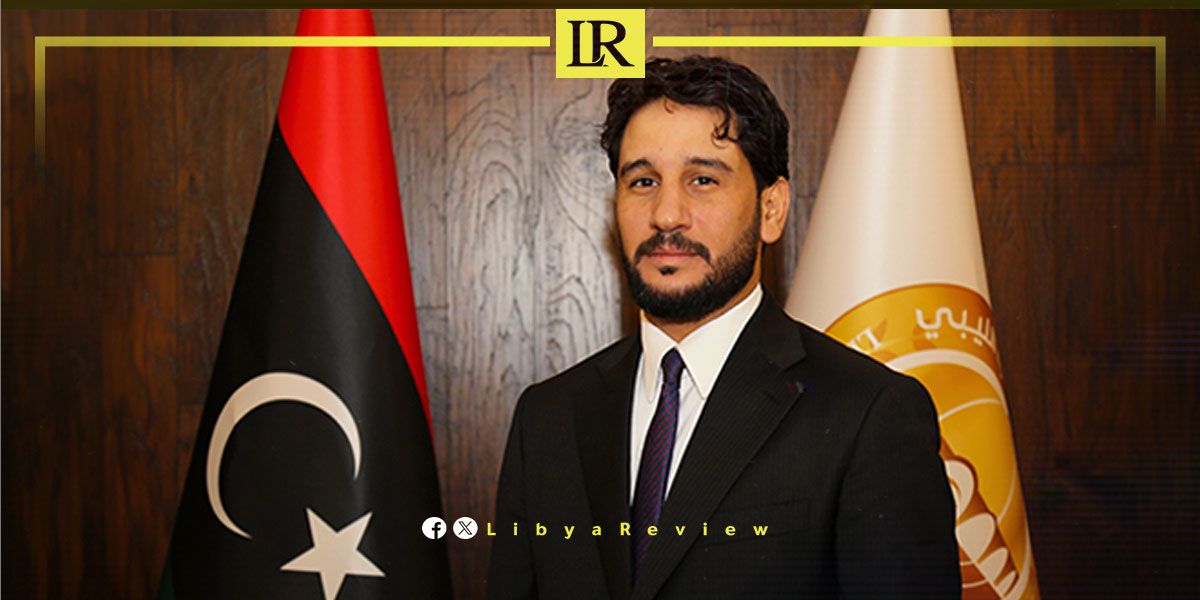
Libya’s Second Deputy Speaker of the House of Representatives, Misbah Doma, has stated that no tax or financial obligation can legally be imposed on citizens unless it is approved through a formal law issued by the Libyan parliament. His remarks come amid growing debate over reports of a proposed tax on certain goods.
In an official statement, Doma emphasized that protecting legal legitimacy is not a political choice but a constitutional obligation. He explained that any decision to impose taxes must follow established legislative procedures, including presentation before the House of Representatives, formal debate, and an official vote during a legally convened parliamentary session.
Doma clarified that the widely circulated reports suggesting that the parliament had approved a tax on some goods are inaccurate. According to the deputy speaker, the House of Representatives has not issued any formal legislative decision authorizing such a measure.
He stressed that the constitutional principle of “no taxation without law” remains a fundamental rule governing public finance. Under this principle, any tax must be introduced through a law approved collectively by the parliament, rather than through individual decisions or administrative actions.
The deputy speaker also addressed recent parliamentary discussions regarding the issue. He noted that the latest session of the House of Representatives was not a new meeting but rather a continuation of a previous session chaired by the speaker and his deputies. During that session, a proposal concerning the possibility of imposing taxes on certain goods was presented for discussion.
However, Doma explained that the proposal was not adopted or approved as legislation. Instead, it was referred to a specialized parliamentary committee for further study and review. Such a referral, he said, represents a preparatory step and does not create any legal obligation or authorize the implementation of a tax.
He further stressed that the will of the parliament cannot be represented by individual statements or assumptions. Legislative authority, he said, can only be expressed through a collective decision that complies with the parliament’s internal regulations governing attendance, deliberation, and voting.
Doma concluded by calling on the Central Bank of Libya to clarify the legal basis of any communications related to implementing the proposed tax, including the official legal framework and the institutions involved in the process.

