
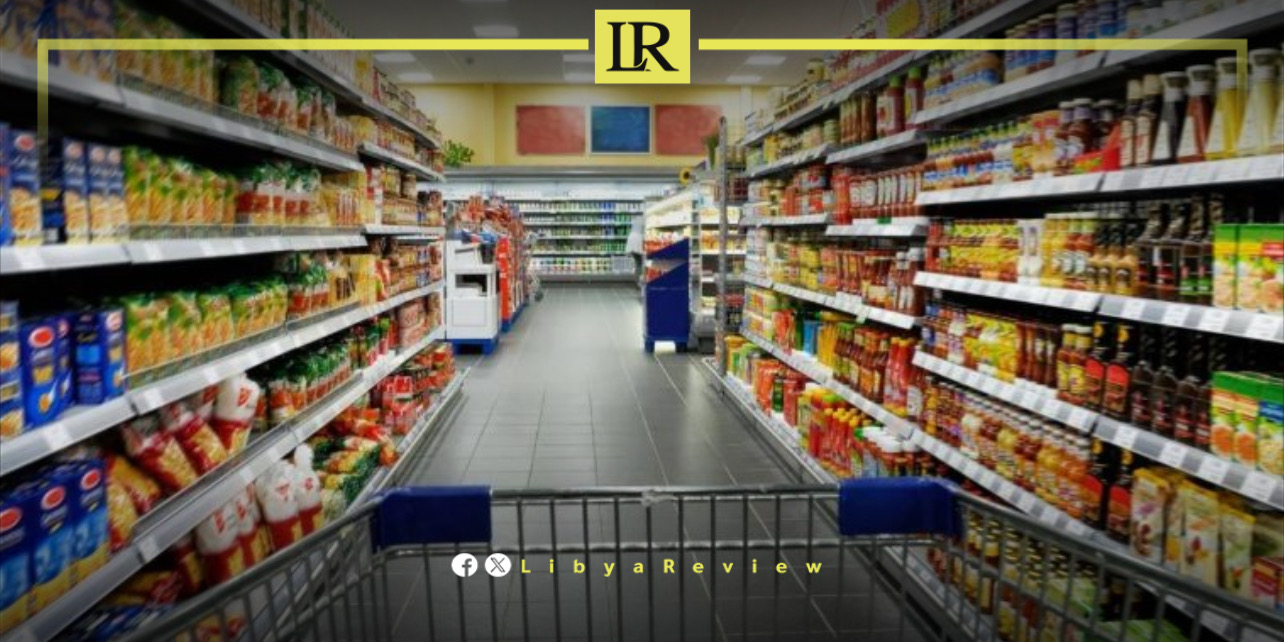
The cost of the minimum food basket in Libya increased by 5 percent in February, reaching 1,128.35 Libyan dinars, according to a report by the World Food Programme. The rise highlights renewed inflationary pressure after a slight decline recorded in January.
The increase was driven mainly by significant price rises in eastern and southern Libya. In the eastern region, food basket costs climbed by 9.1 percent to 1,132.21 dinars, while in the south they rose by 9.5 percent to 1,123.62 dinars. In contrast, the western region recorded a modest decrease of 1.3 percent, bringing the cost to 1,129.59 dinars, although overall price levels remain high.
A key factor behind the increase is the 14.7 percent devaluation of the Libyan dinar announced by the Central Bank of Libya on January 18. The report noted that the effects of the currency adjustment are gradually becoming visible in local markets, particularly in the pricing of imported goods.
Several essential commodities recorded price increases, including rice, cooking oil, sugar, and processed food products. Transportation costs also rose due to exchange rate fluctuations, adding further pressure on food prices across the country.
The rise in the eastern region was partly attributed to a catch-up effect following lower prices in previous months. Meanwhile, the southern region continues to face additional challenges such as high transportation costs, supply chain constraints, and dependence on long and complex delivery routes.
Despite a slight decline in the western region, prices remain elevated due to strong consumer demand, heavy reliance on imports, and the rapid impact of exchange rate changes, particularly in major cities such as Tripoli.
In response to rising costs, the Libyan Development and Reconstruction Fund launched an initiative in mid-February to offer essential goods at subsidized prices, including cooking oil, rice, sugar, flour, and tomato paste. However, the overall impact of this measure on market prices remains uncertain.

