
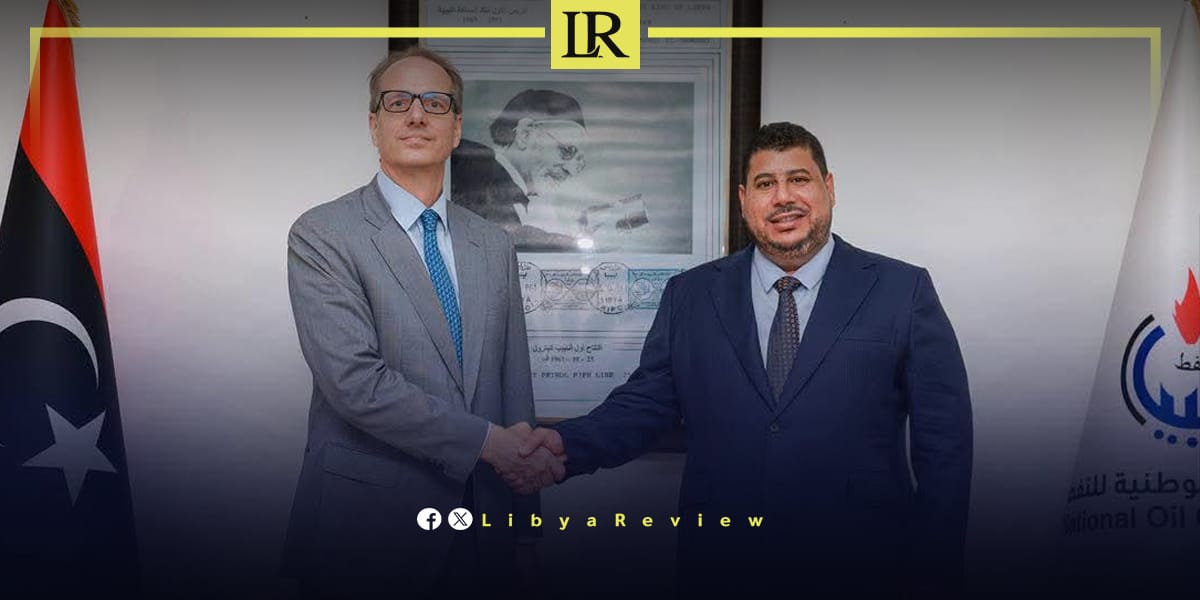
Libya’s National Oil Corporation (NOC) has discussed with the United Kingdom ways to strengthen cooperation in the oil and gas sector, including the possible return of British energy companies to Libya, according to a statement by NOC Chairman Masoud Suleiman.
Suleiman said he held talks with the British ambassador to Libya, Martin Reynolds, focusing on expanding bilateral energy ties and encouraging UK firms to resume operations in the country after years of disruption linked to political instability and security concerns.
The discussions reviewed opportunities for British companies to invest in Libya’s upstream and downstream oil and gas projects, as well as participation in ongoing development and infrastructure upgrades across the sector.
According to the NOC statement, both sides also explored mechanisms to increase British private sector involvement in Libya’s energy industry, particularly in areas linked to field development, production optimisation and technical services.
Suleiman stressed the importance of international partnerships in supporting Libya’s plans to raise oil and gas output and improve operational efficiency across key facilities. He said cooperation with experienced foreign companies would help accelerate technical development and strengthen the country’s energy infrastructure.
Training and capacity building were also central to the talks. The two sides discussed expanding cooperation in professional development programmes aimed at improving the skills of Libyan engineers and technicians. This would include structured training initiatives and knowledge transfer programmes aligned with global industry standards.
Suleiman highlighted that developing human resources remains a key pillar of the NOC’s strategy to modernise the sector and ensure sustainable production growth. He said enhanced training cooperation with British institutions and companies would support Libya’s long-term energy ambitions.
Libya holds Africa’s largest proven oil reserves, but production has frequently been affected by political divisions, infrastructure challenges and periodic shutdowns of key fields and export facilities since 2011.
The NOC has recently stepped up efforts to attract international investment and restore confidence in the sector, aiming to increase output and stabilise production levels in the coming years.
Both sides agreed to continue coordination and maintain open channels of communication to explore practical steps for future cooperation in Libya’s oil and gas industry.

