
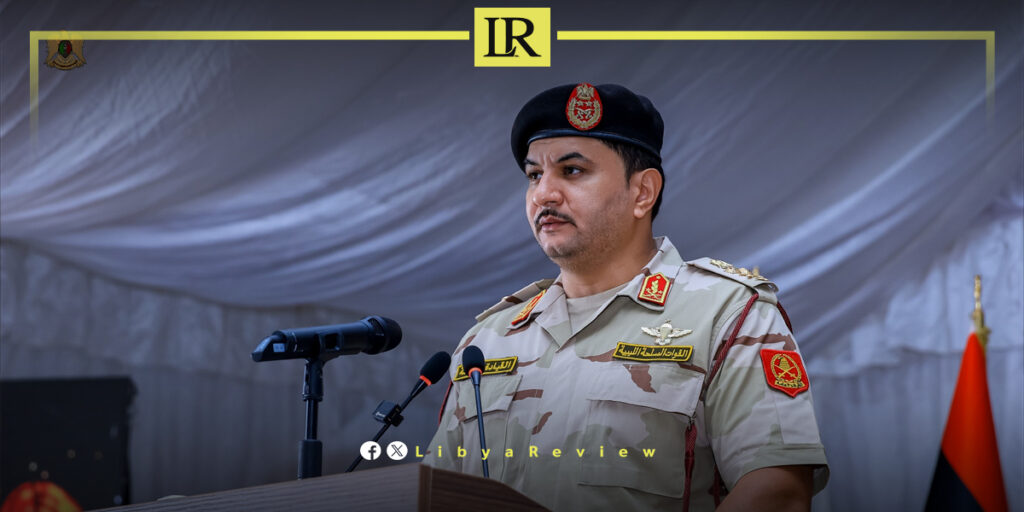
Lieutenant General Saddam Haftar, Deputy Commander-in-Chief of the Libyan National Army, has intensified a multi-layered strategy combining diplomatic outreach, military coordination, financial engagement and tribal communication, reinforcing his position within Libya’s fragmented state-building process.
In recent weeks, Haftar’s movements have reflected a structured and parallel approach. His external engagements included a visit to Jordan in mid-April focused on military cooperation and training, followed by meetings in Malta on April 26 with senior officials to discuss developments in Libya. These steps indicate an effort to expand international partnerships while providing broader political backing for internal initiatives.
His participation as the sole Libyan representative at the Munich Security Conference further underscored rising international attention to actors with effective control on the ground. Discussions focused on counterterrorism, particularly threats from Islamic State elements, alongside migration, border security and the protection of oil infrastructure.
On the military track, Haftar played a central role in the Flintlock 2026 exercises held in Sirte under the supervision of United States Africa Command. The drills included forces from eastern and western Libya, including units affiliated with the Government of National Unity. On the sidelines, Haftar held meetings with western officials, including Abdul Salam Al-Zoubi, reflecting efforts to establish practical coordination channels.
In Benghazi, Haftar hosted Stephanie Koury, Deputy Special Representative for Political Affairs at the United Nations Support Mission in Libya, alongside National Security Adviser Abdelrazek Al-Nadhouri. Talks addressed political and economic developments, with the UN welcoming progress on unifying public spending. Discussions also highlighted the formation of the (3+3) Joint Committee to establish a unified operations room targeting terrorism and organised crime.
These developments coincided with progress towards adopting a unified national budget, marking a significant step in aligning financial governance between eastern and western institutions.
Parallel to these efforts, Haftar expanded engagement with tribal leaders across Sebha, Benghazi and border regions, linking security objectives with social influence.
Taken together, these intersecting tracks reflect a calculated and integrated approach, positioning Haftar prominently within evolving efforts to unify Libya’s institutions amid ongoing political complexity.

